See the Red Flags Before They Become Your Problem

AI adverse media screening that finds the negative news that matters, without the noise.
What is adverse media screening?

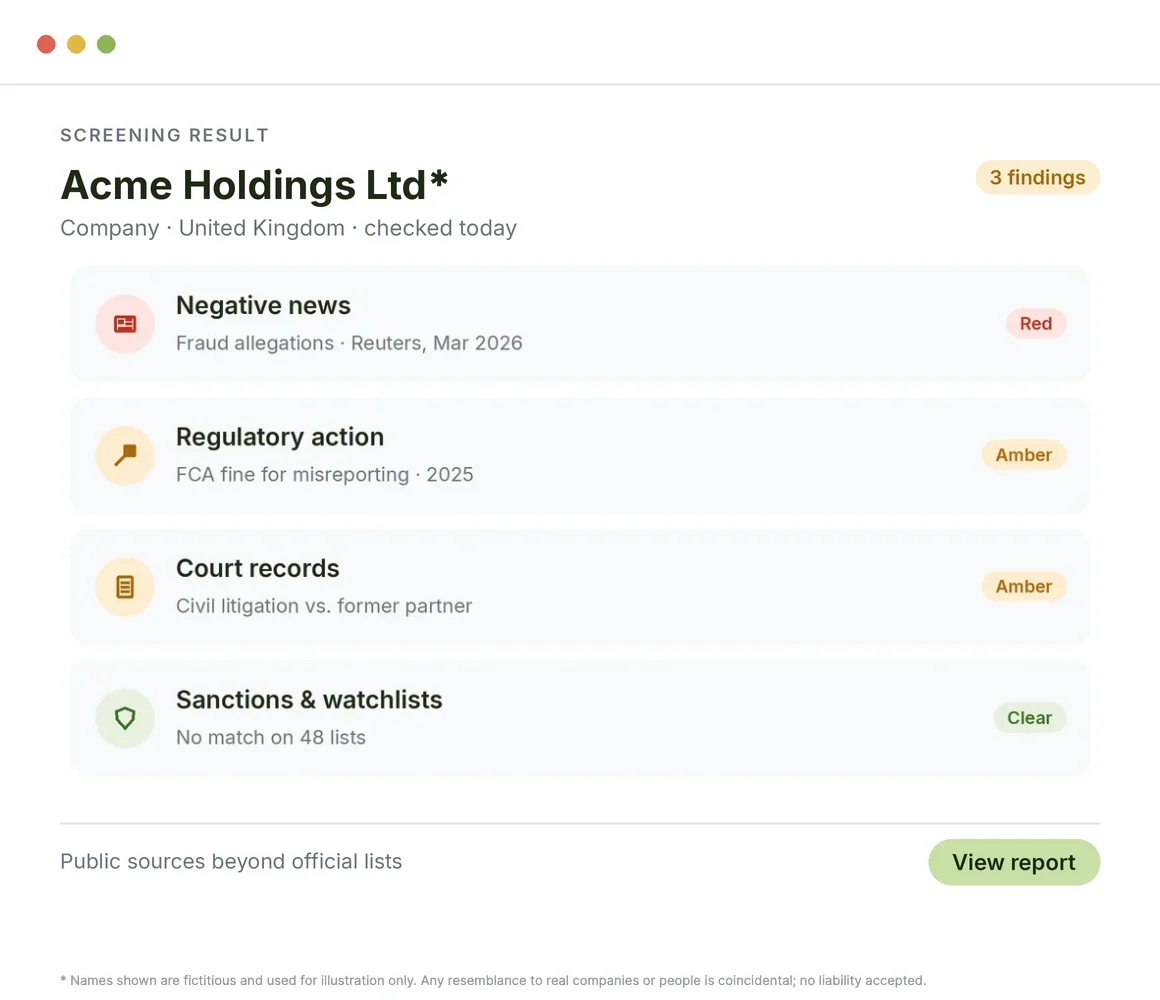
Adverse media screening is the process of checking a person or company against negative news and public information: fraud, corruption, financial crime, regulatory action, criminal charges, or anything else that signals risk. It goes beyond sanctions and watchlists to catch trouble that has been reported publicly but hasn’t yet made it onto an official list. For anyone deciding whether to onboard a customer, sign a supplier, or hire a candidate, it answers a simple question: is there anything out there about this name that I ought to know before I commit?
Why do businesses need adverse media screening?
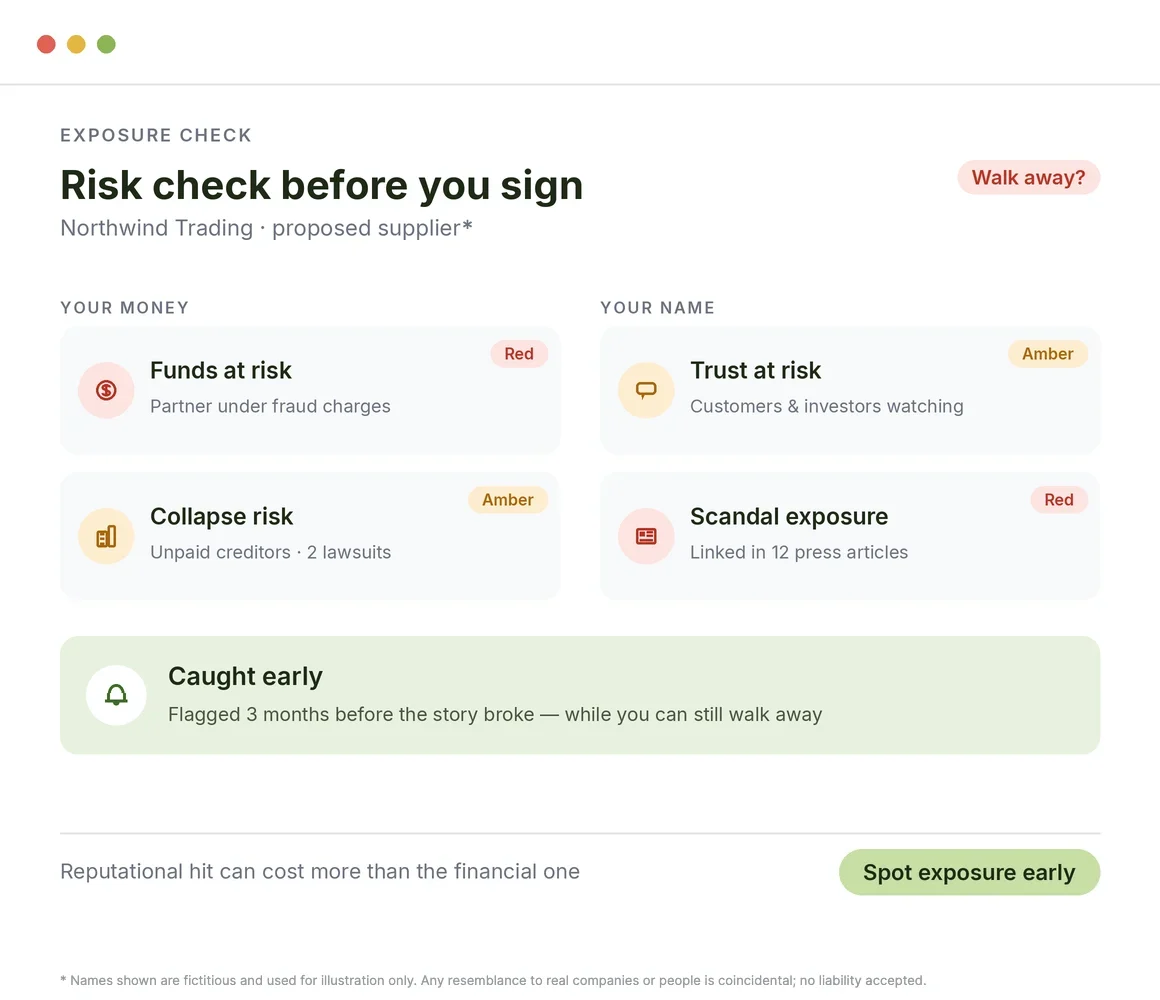
Two things are at stake: your money and your name. Do business with the wrong person and you can end up funding fraud, laundering someone else’s proceeds, or absorbing losses when a partner collapses under charges you never saw coming. Then comes the reputational hit, which can cost more than the financial one. Customers, investors, and regulators all lose trust fast when a company is linked to a scandal it should have caught. Adverse media screening is how you spot that exposure early, while you can still walk away, rather than reading about it after the damage is done.

Manual vs. automated screening

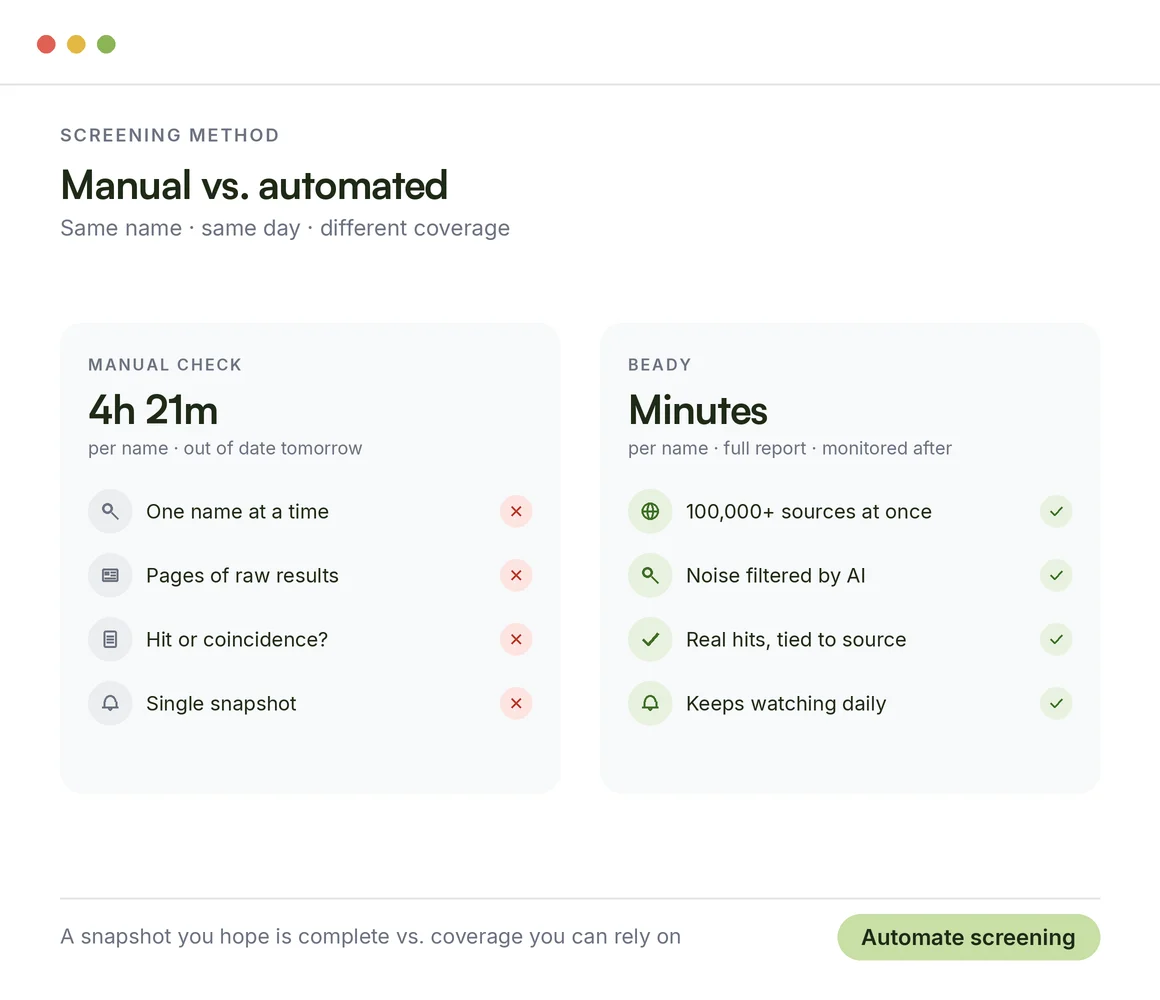
You can screen for negative news by hand, but it doesn’t hold up. A manual check means searching names one at a time, reading through pages of results, and trying to tell a real hit from a coincidence, and it only captures a single moment. By the time you’ve finished one batch, the news has moved. Automated screening searches 100,000+ sources at once, filters out the noise, and keeps watching after the first check. The difference isn’t just speed. It’s the difference between a snapshot you hope is complete and coverage you can actually rely on.

Screen for negative news, powered by AI

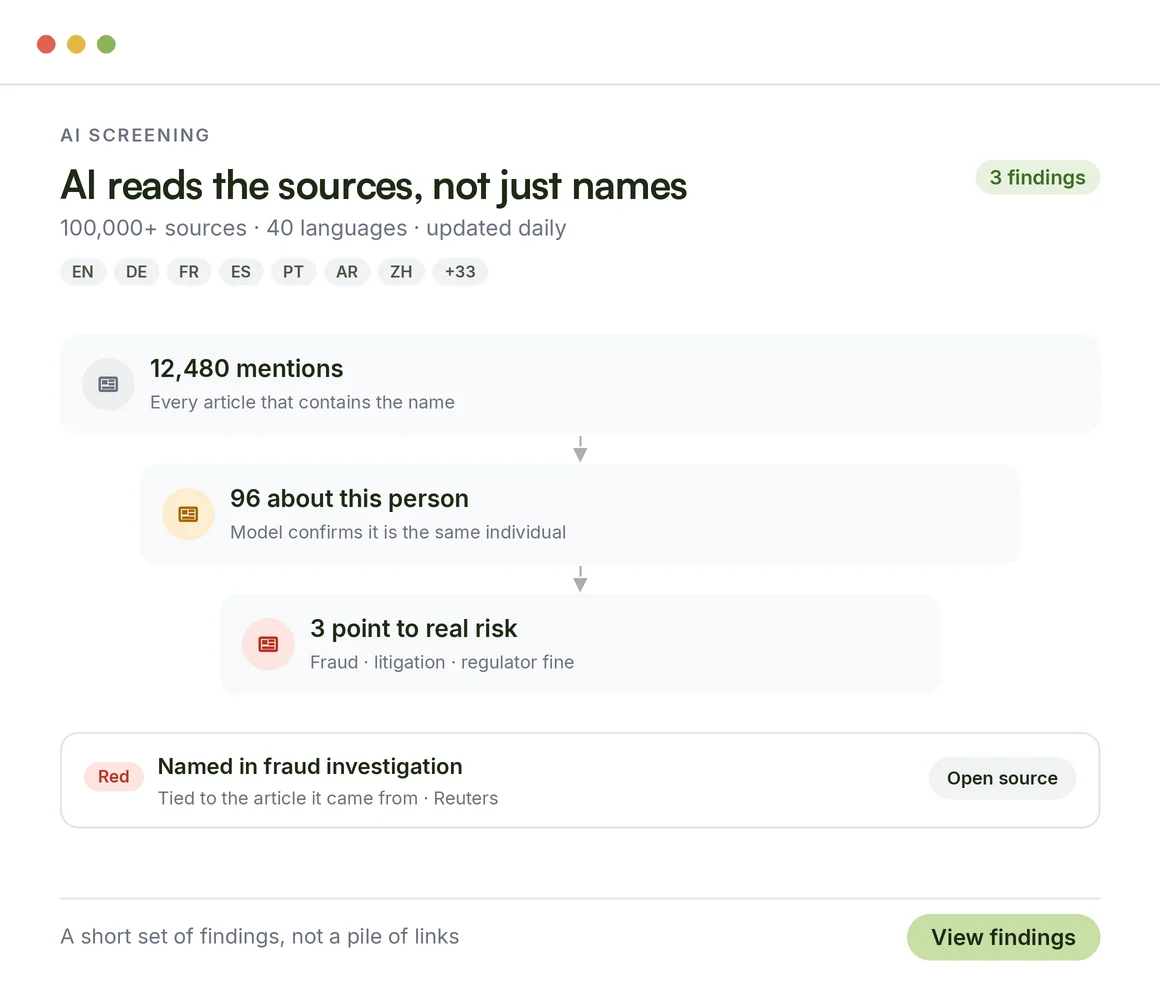
AI is what makes negative news screening workable at scale. Instead of matching a name and returning everything, Beady’s models read each article the way a person would, working out whether it’s really about the individual you’re checking and whether it points to genuine risk. They sift more than a hundred thousand news sources, in multiple languages, and pull out the mentions that matter. What you get isn’t a pile of links to wade through. It’s a short, relevant set of findings, each one tied to the article it came from.

Find the clear signal in the noise

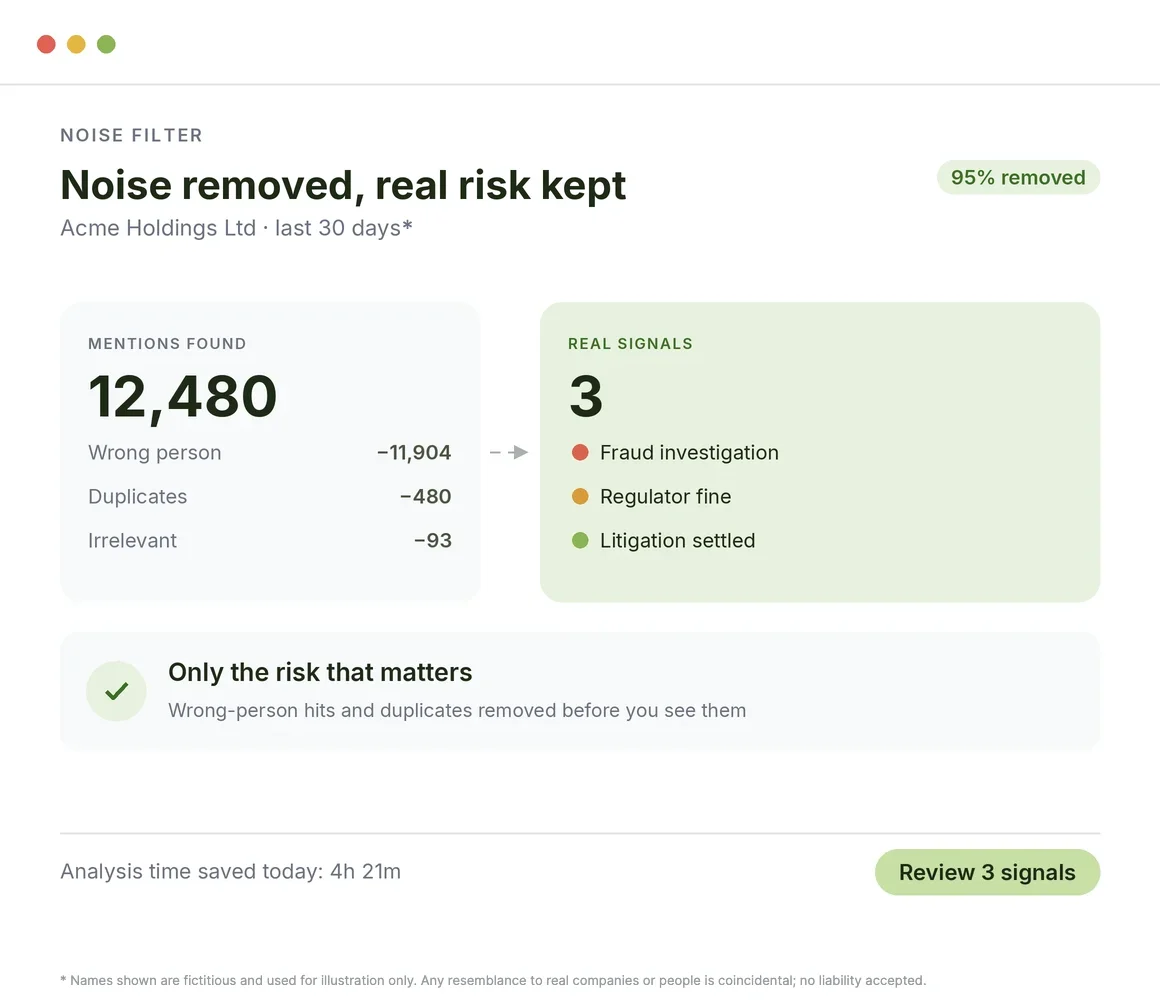
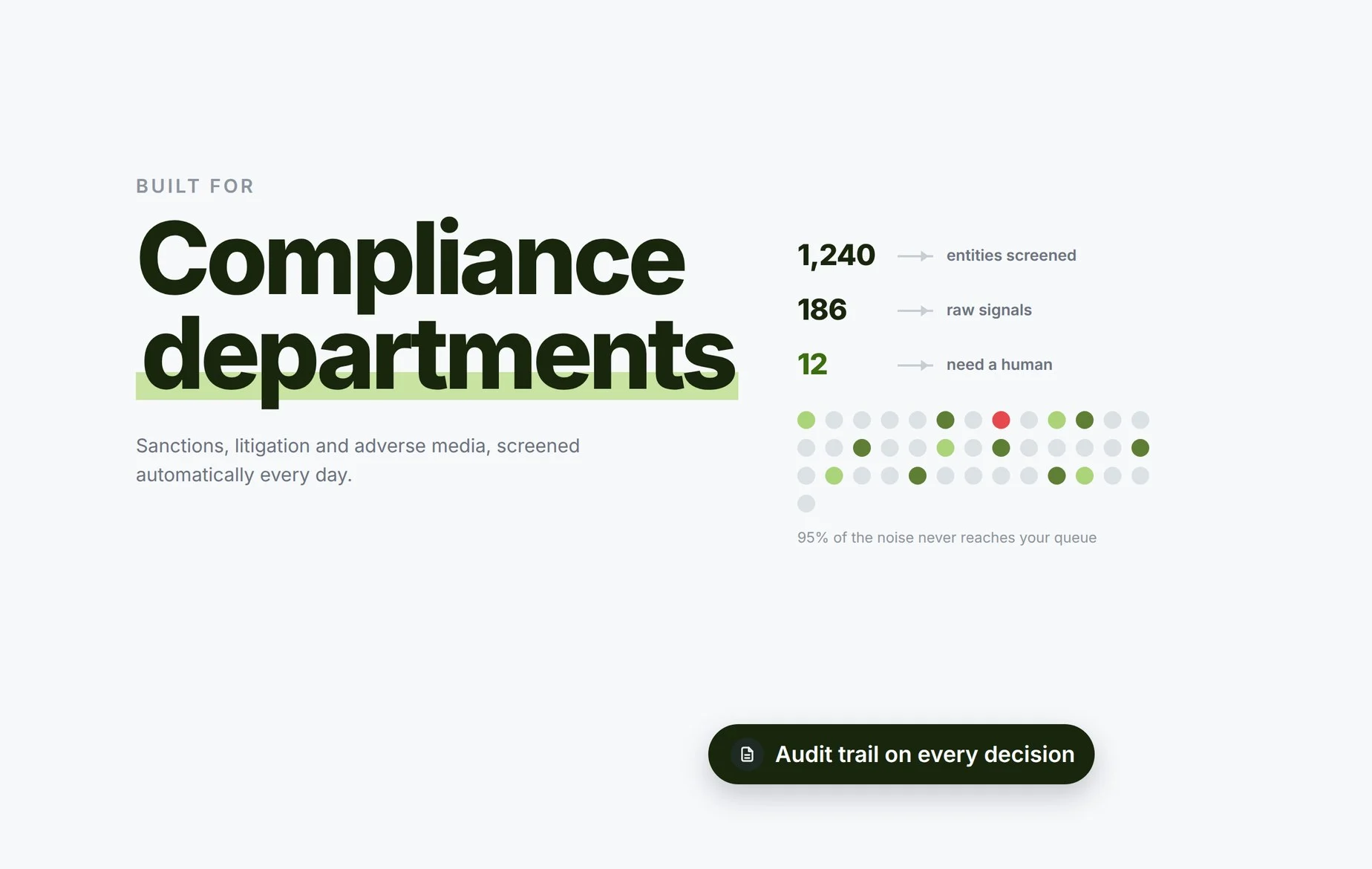
Nobody struggles to find mentions in adverse media. The struggle is telling the ones that matter apart from the ones that don’t. Search for a name that plenty of people share and thousands of results come back to you. Some are about a completely different person. Some are ancient. Plenty are positive. And a lot of the time it’s just one event that got picked up by dozens of outlets, showing up again and again. Beady deals with all of that upfront — roughly 95 percent of the noise is gone before you see anything, and duplicate reports get grouped so a single event counts once. Your team ends up reviewing a handful of verified signals instead of reading everything.

01 SAN — Sanctions
Beady screens every name against global sanctions lists, including OFAC, the EU, the UN, and the UK’s HMT, refreshed daily, so a newly designated party is caught right away.
02 AM — Adverse Media
Beady scans 100,000+ news sources for negative coverage tied to a person or company, surfacing fraud, scandal, and wrongdoing reported publicly but not yet on any official list.
03 SOE — State-Owned Entities
Beady flags state-owned entities and companies with government ownership, which carry heightened sanctions and corruption risk, so you can apply the extra scrutiny these connections call for.
04 PEP — Politically Exposed Persons
Beady screens for politically exposed persons, whose position carries a higher risk of bribery and corruption, flagging them so you can apply enhanced due diligence before you proceed.
05 RCA — Relatives & Close Associates
Risk extends beyond the PEP themselves. Beady identifies relatives and close associates of politically exposed persons, catching the connected individuals often used to move or hide higher-risk activity.
06 SIP — Special Interest Persons
Beady flags special interest persons, individuals linked to crime, terrorism, or other serious risk, even when they don’t appear on a formal sanctions list, so nothing slips by.

Top Categories of Adverse Media

Adverse media covers a wide range of risk. These are the categories Beady surfaces most often:
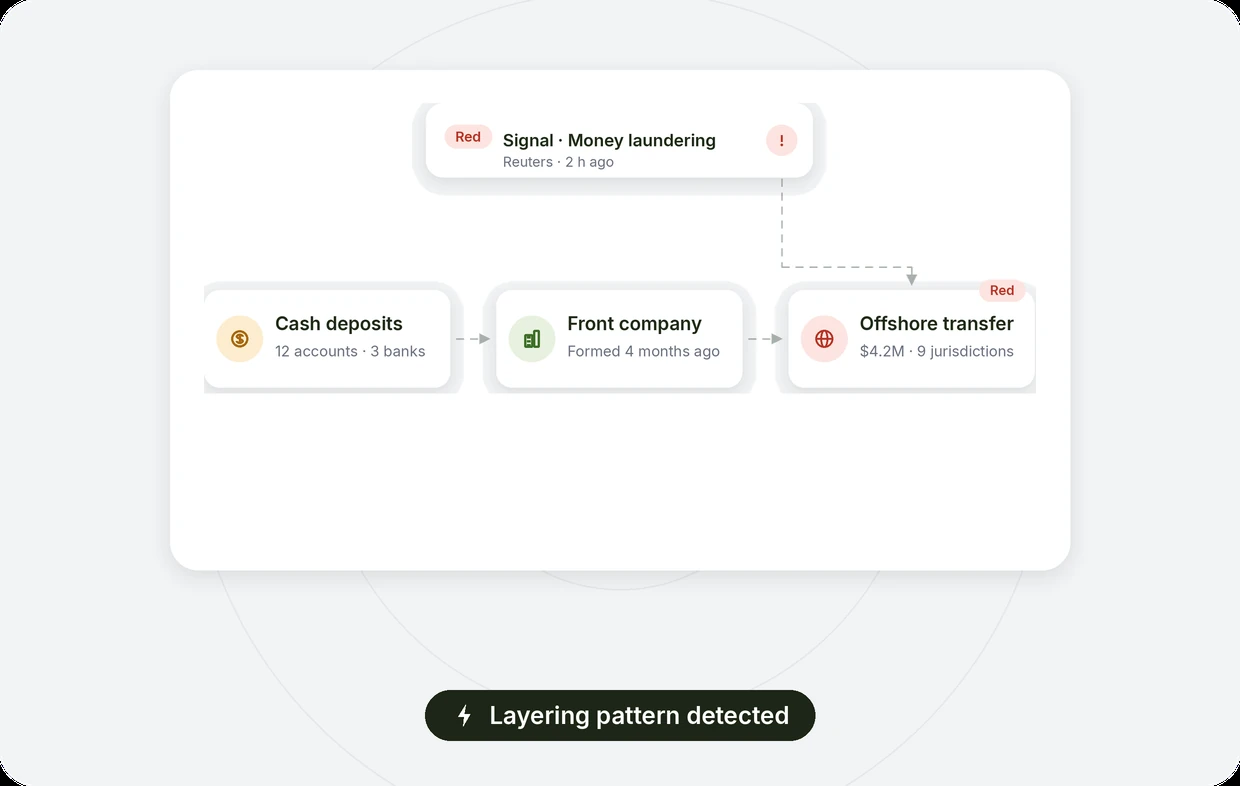
Money laundering
Coverage linking a person or company to laundering illicit funds through legitimate-looking channels.
Fraud & financial crime
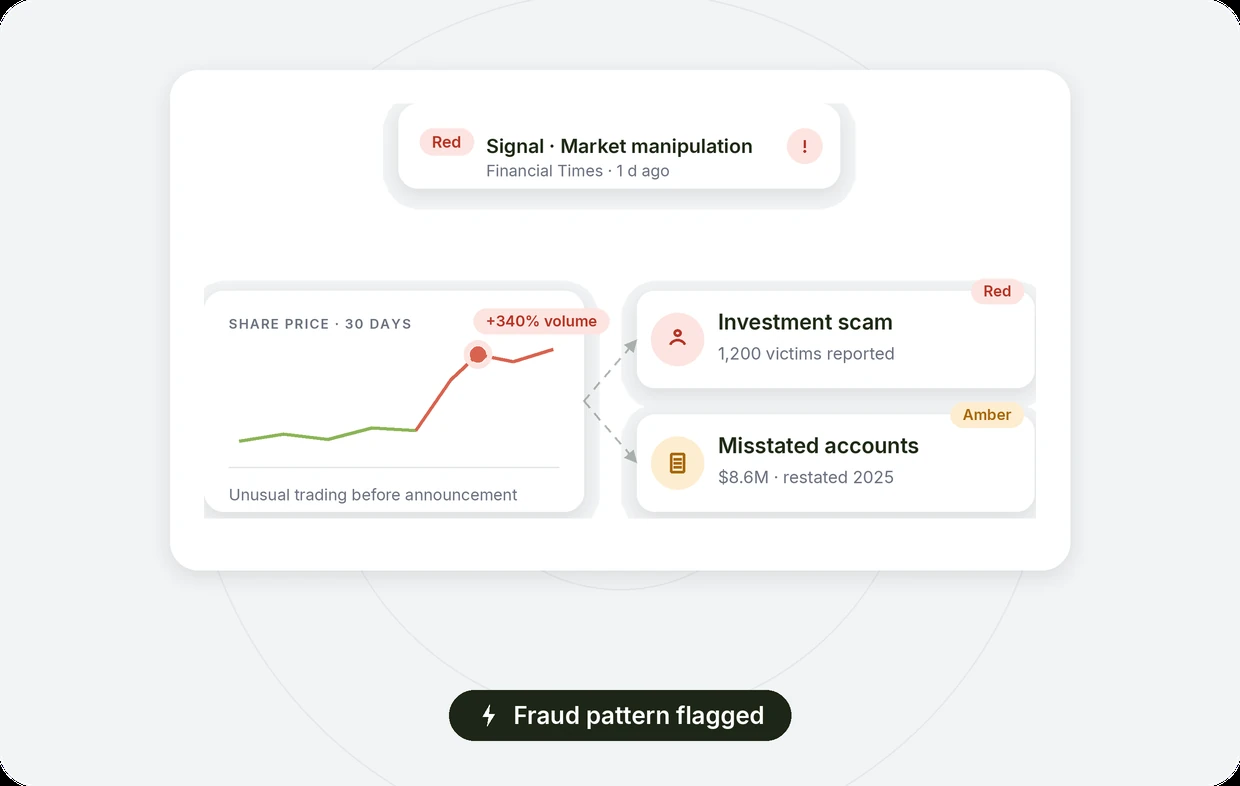
Reports of fraud, scams, market manipulation, or other financial crimes.
Corruption & bribery
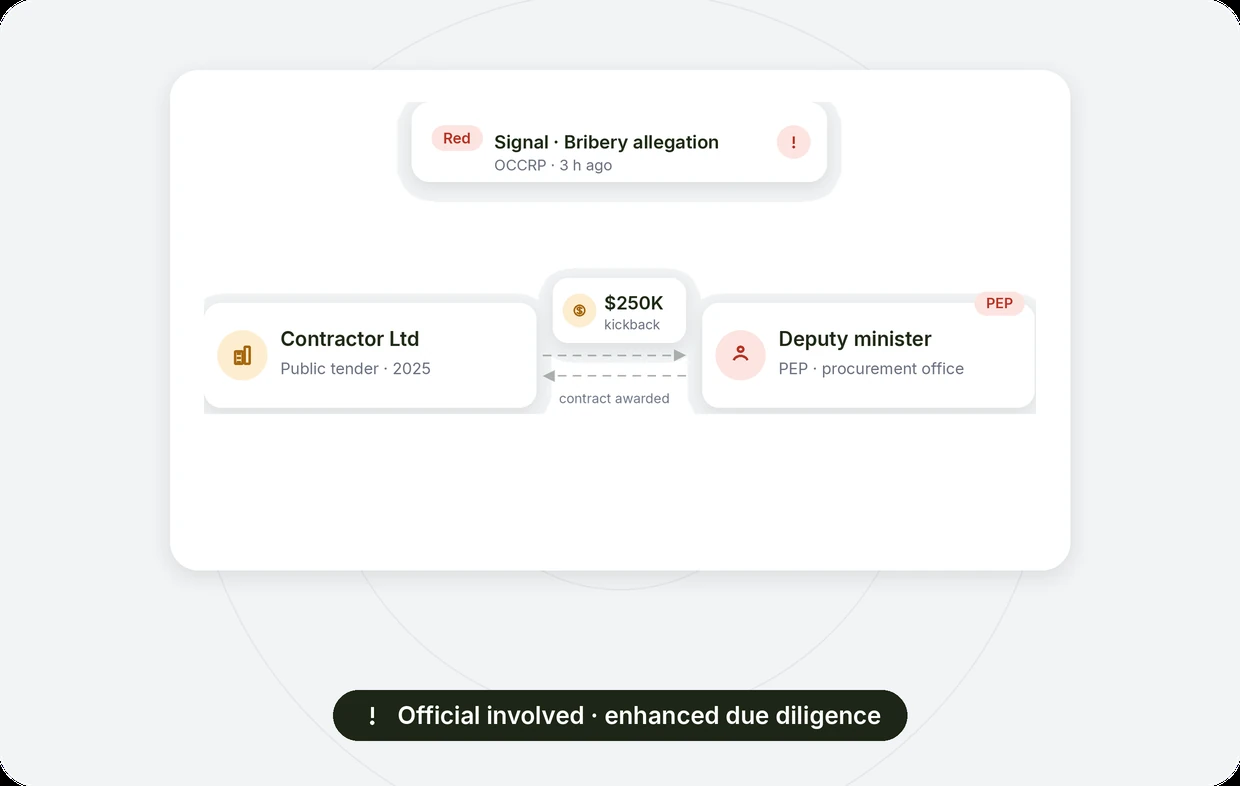
Allegations or findings of bribery, kickbacks, or corrupt dealings, often involving officials.
Sanctions violations
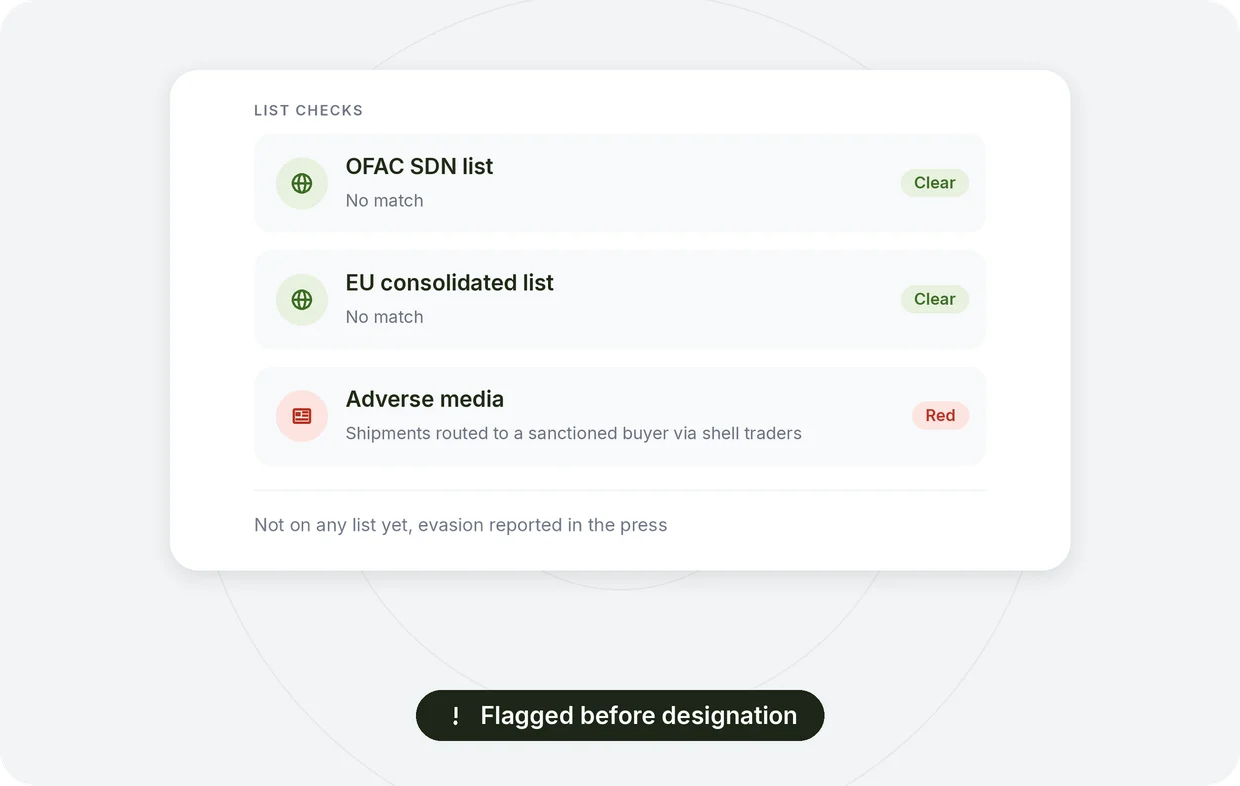
News of breaching or evading sanctions, a serious offence even before a formal designation.
Terrorism financing
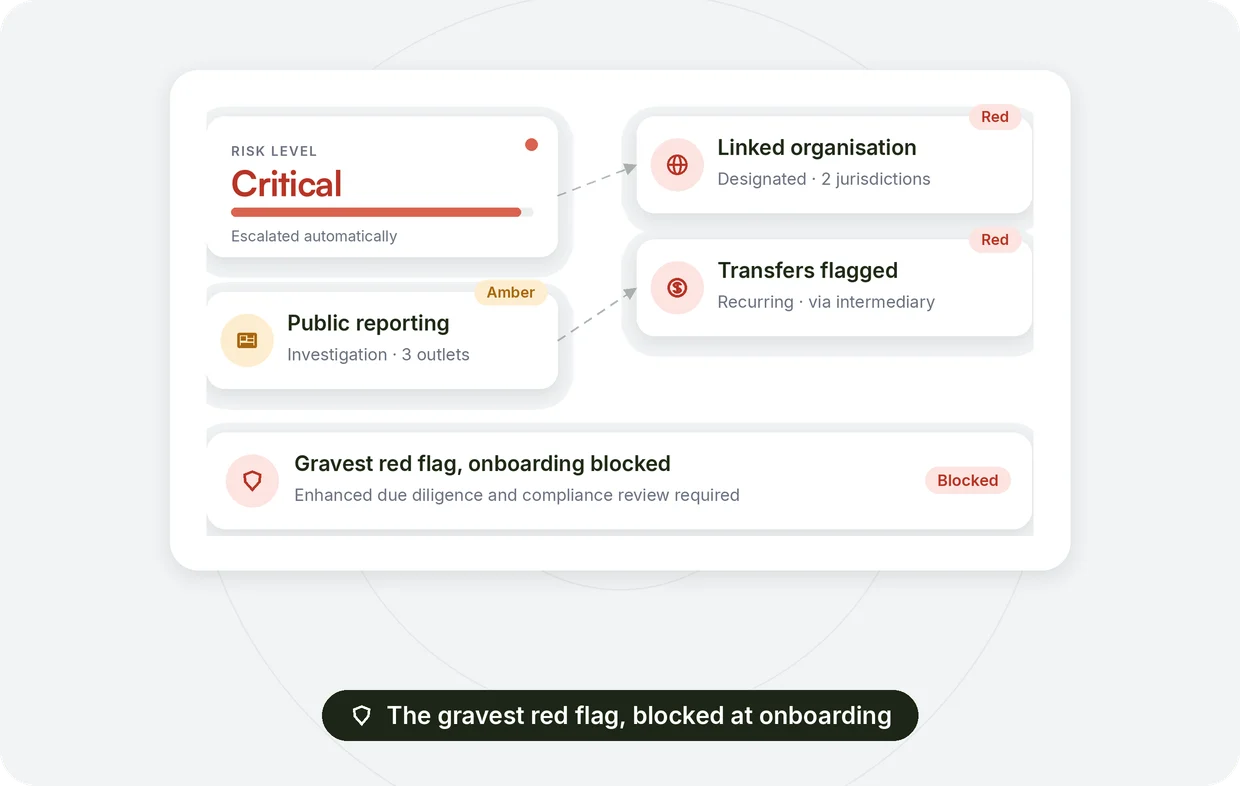
Any connection to funding or supporting terrorist activity, among the gravest red flags.
Criminal investigations & convictions
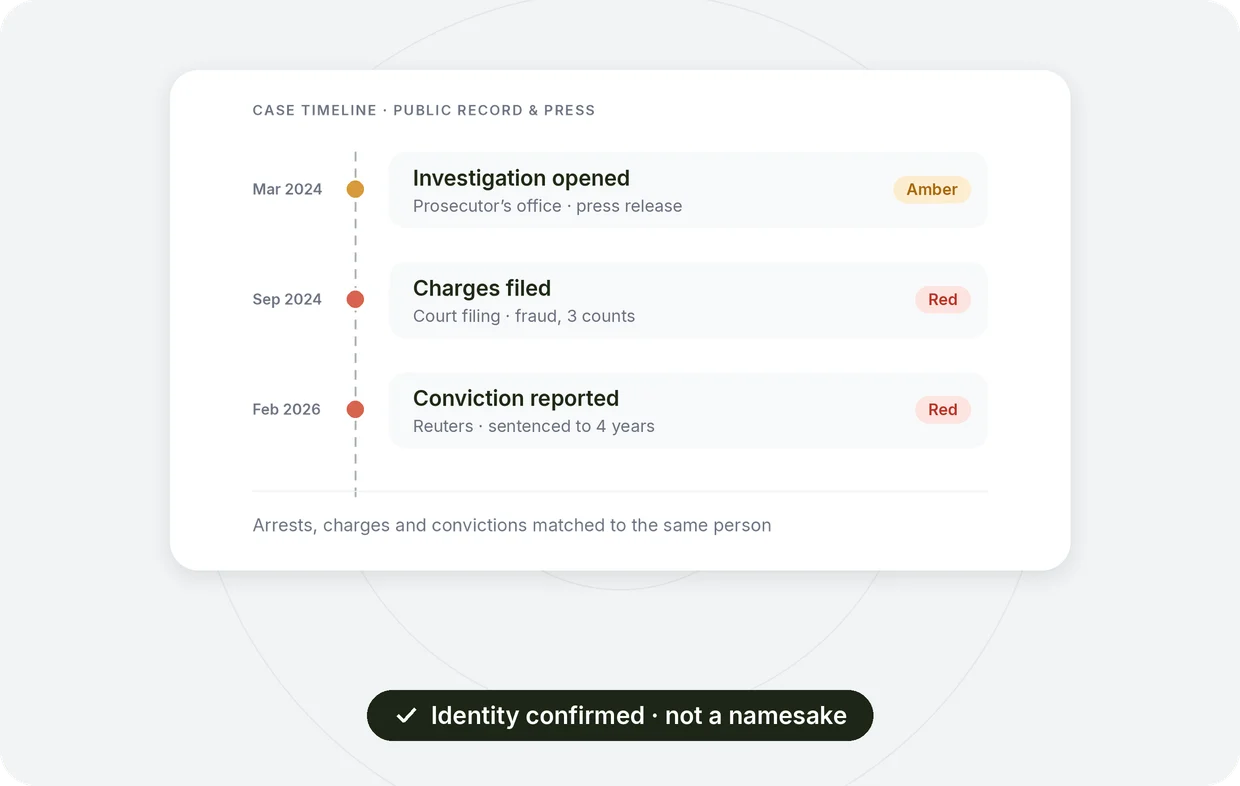
Arrests, charges, prosecutions, or convictions reported in the public record and the press.
Regulatory enforcement & fines
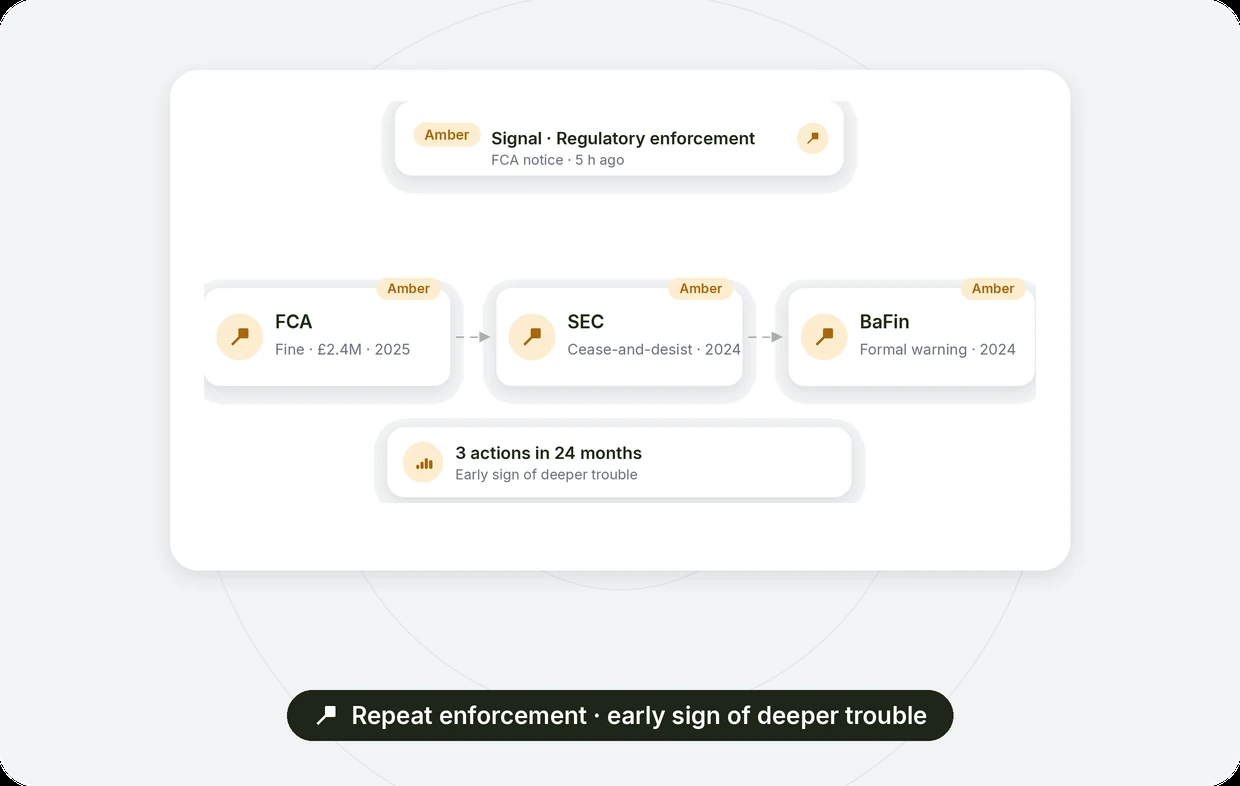
Actions, penalties, and fines imposed by regulators, often an early sign of deeper trouble.
Embezzlement, theft & extortion
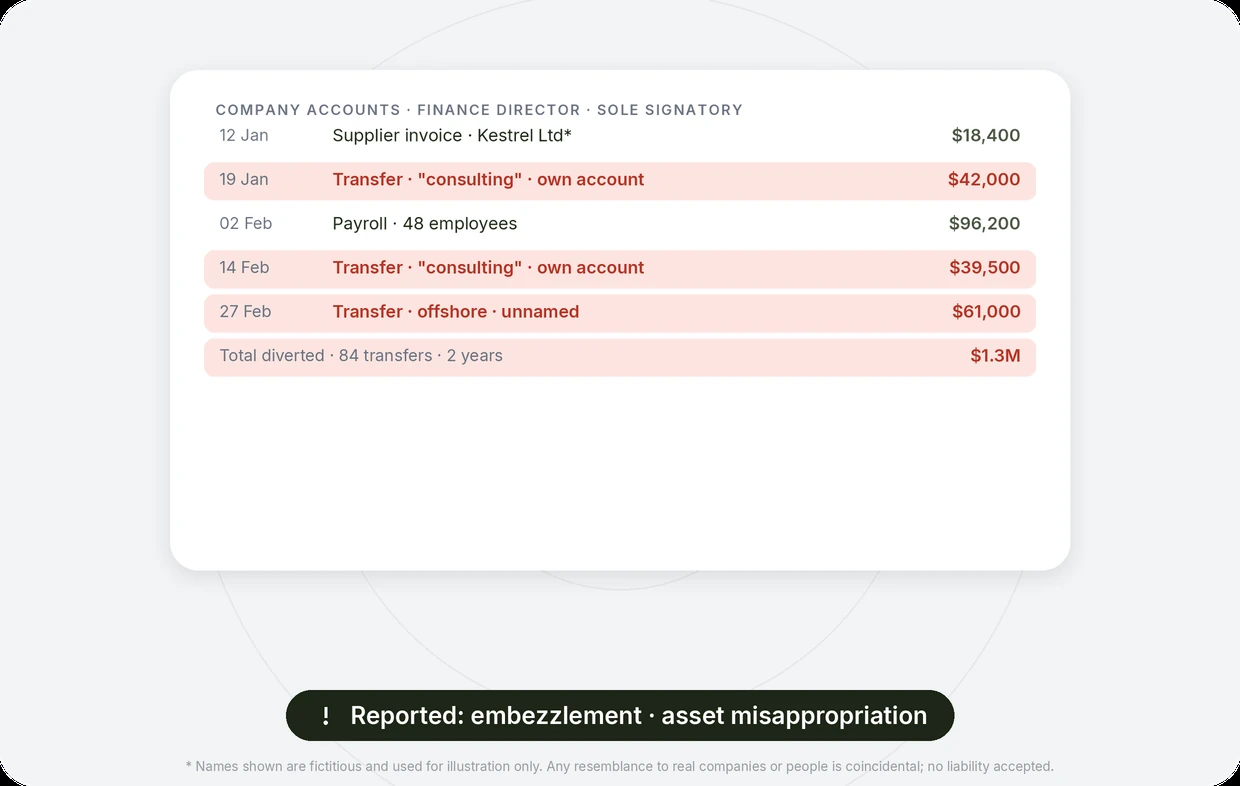
Reports of embezzlement, theft, extortion, or other illegal appropriation of funds or assets.
Significant civil litigation
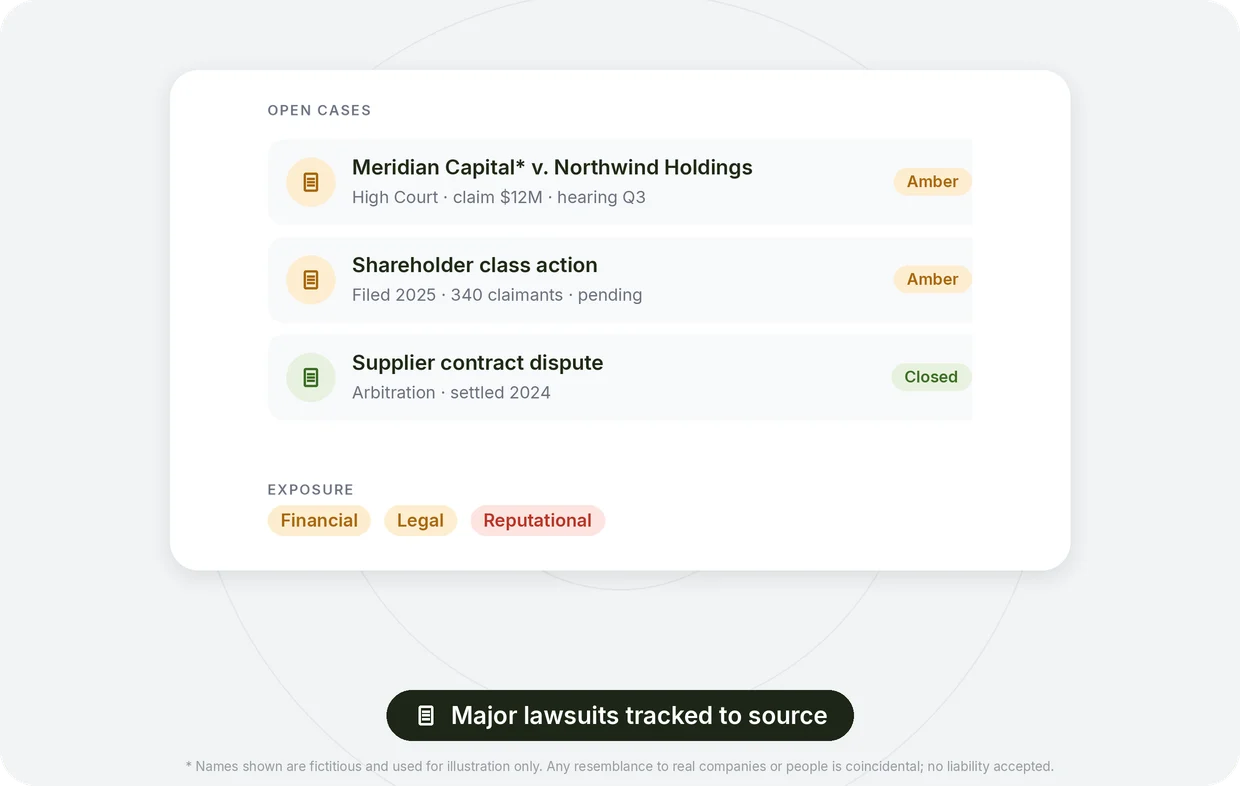
Major lawsuits and legal disputes that signal financial, legal, or reputational exposure.
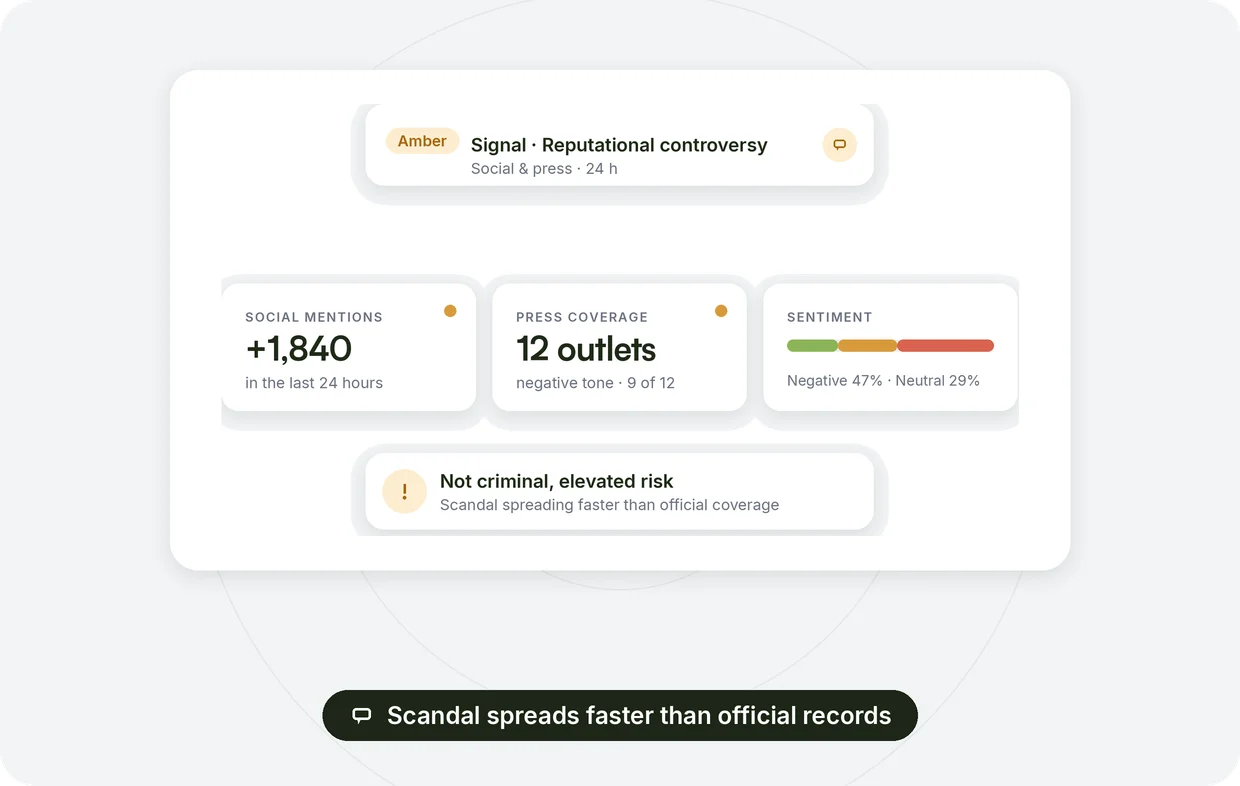
Reputational controversies
Scandals and controversies that may not be criminal but point to elevated risk.
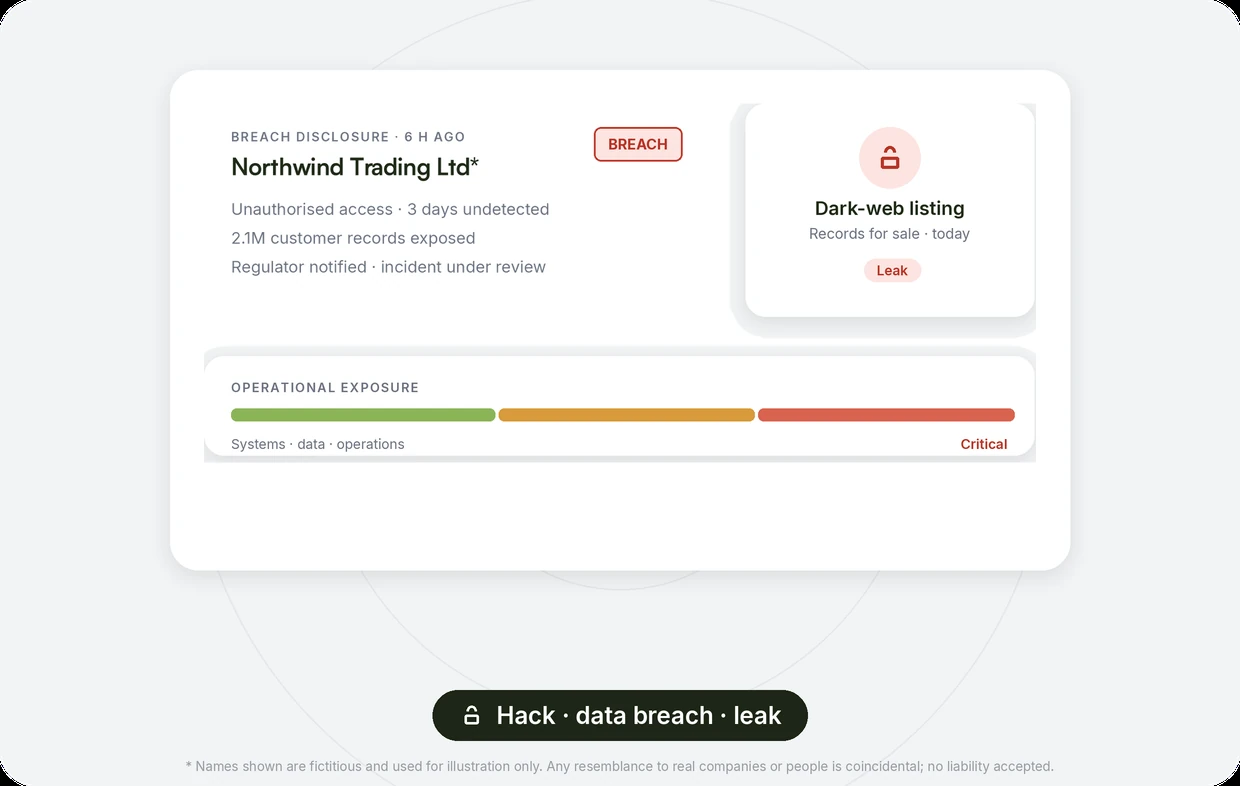
Security breaches
Hacks, data breaches, and leaks that expose operational weakness or compromised data.

See what the press knows before your counterparty tells you.

Every source that matters, in every language your counterparties speak — the right person every time, and a clear signal instead of noise.

How Does Adverse Media Screening Work?

Adverse media screening isn’t just a keyword search. Beady runs every name through a multi-step AI pipeline:
Step 1
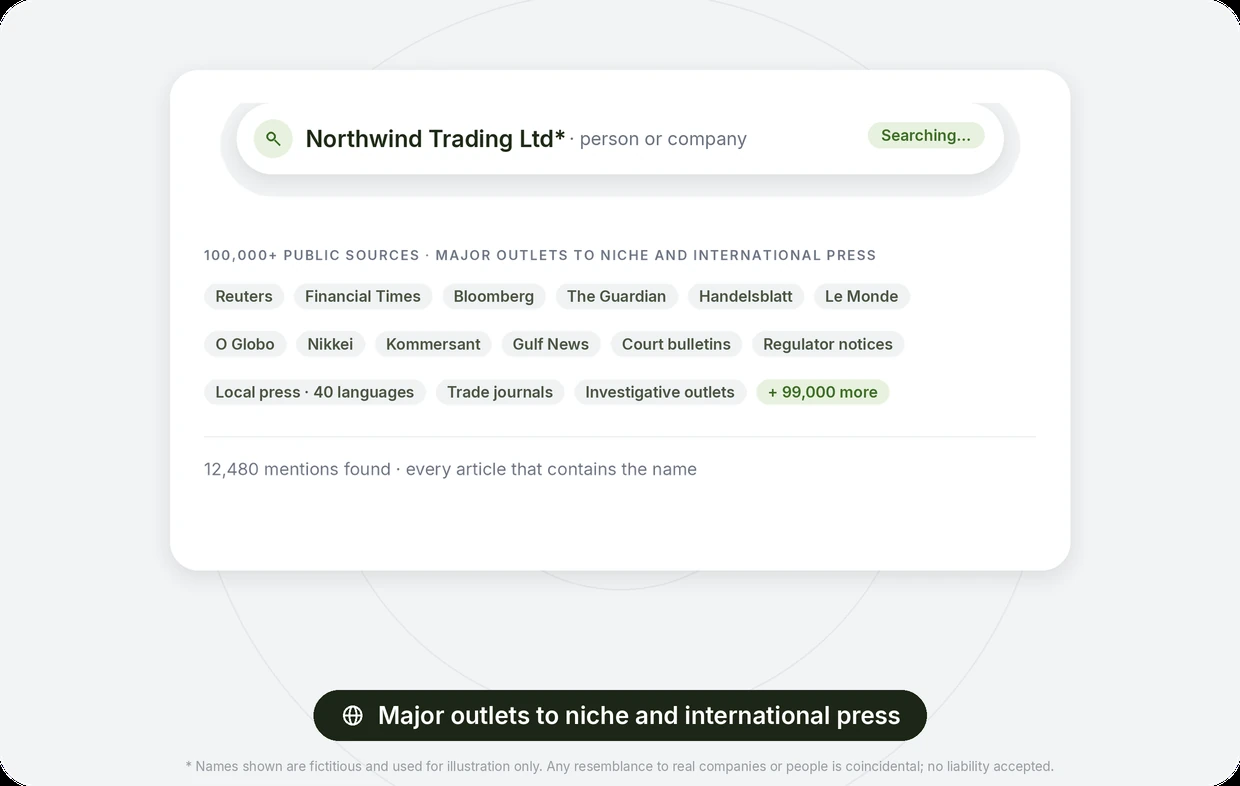
Search Across 100,000+ Sources
Beady searches for mentions of a person or company across more than 100,000 public sources, from major news outlets to niche and international press.
Step 2
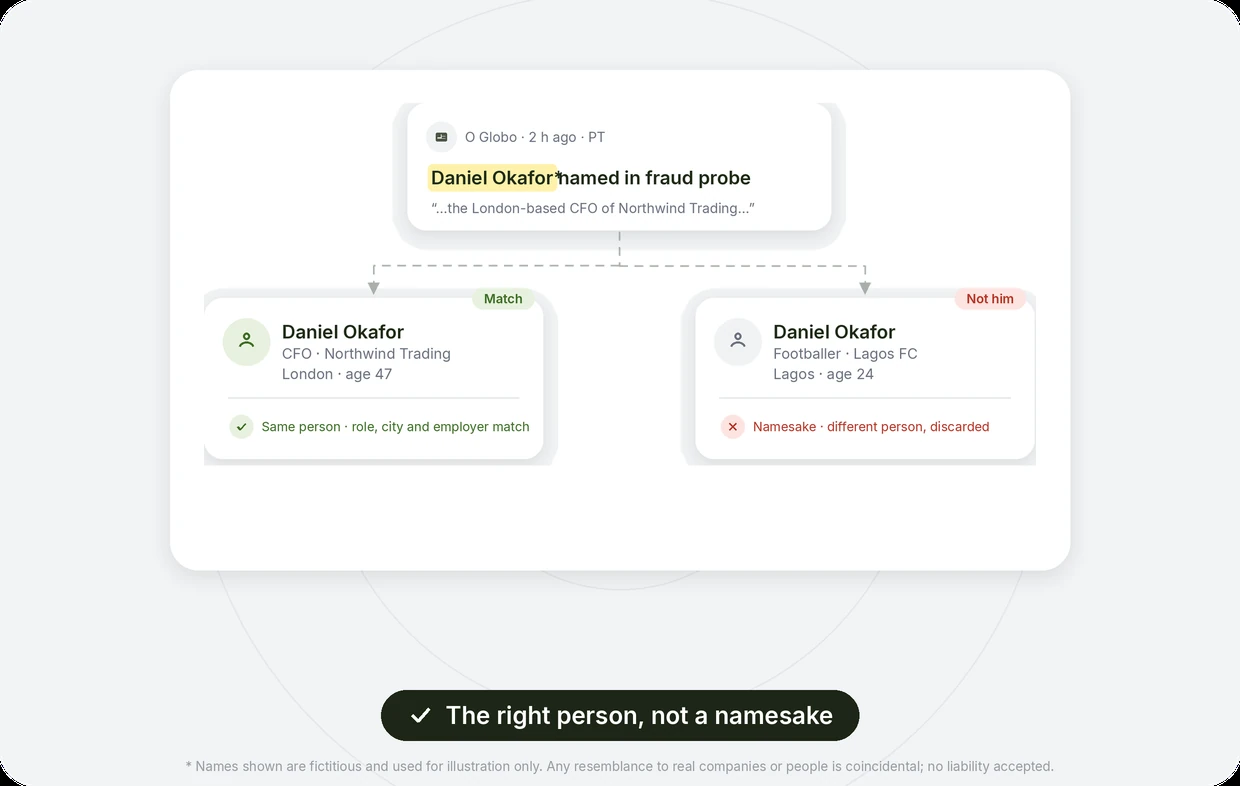
Matching
Not every mention of a name is the right one. Beady confirms that the article genuinely refers to the company or person you’re checking, not a namesake.
Step 3
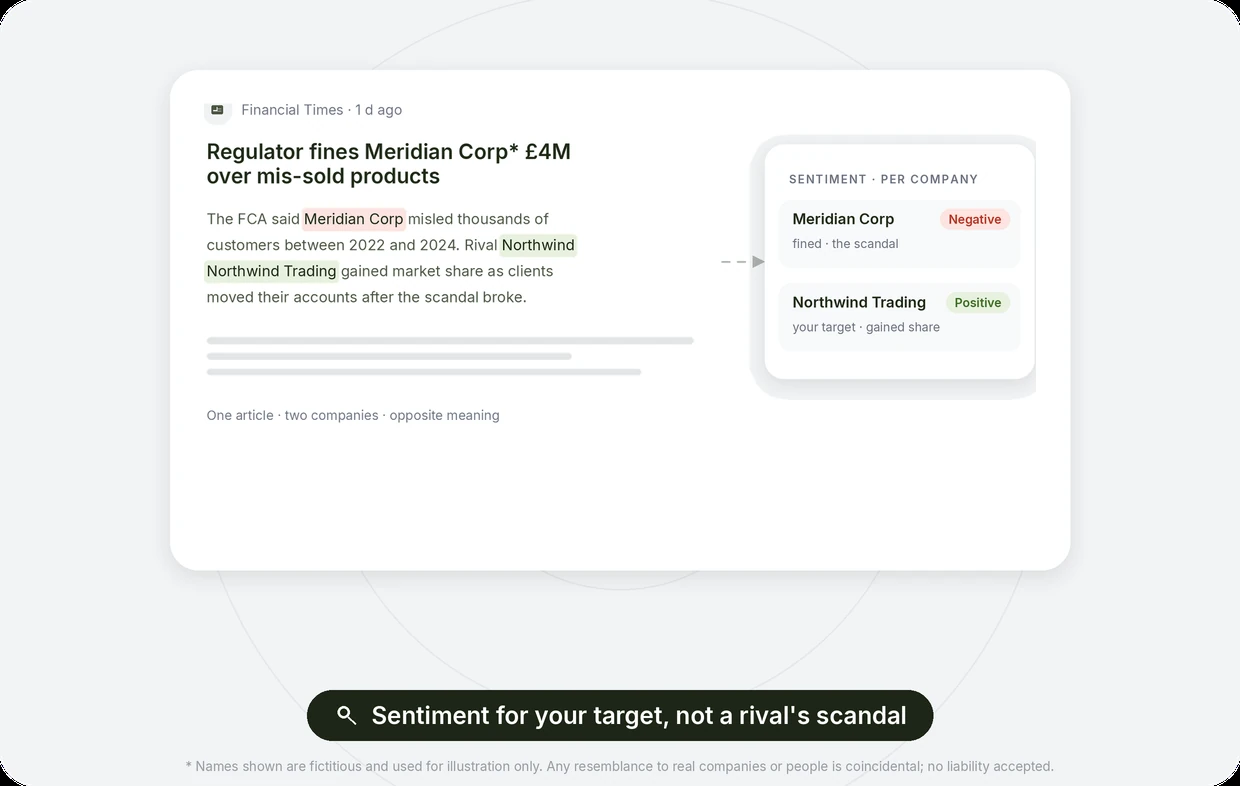
Contextual Sentiment Analysis
When an article mentions several companies, Beady works out the sentiment for the one you’re screening specifically, so a rival’s scandal isn’t mistaken for your target’s.
Step 4
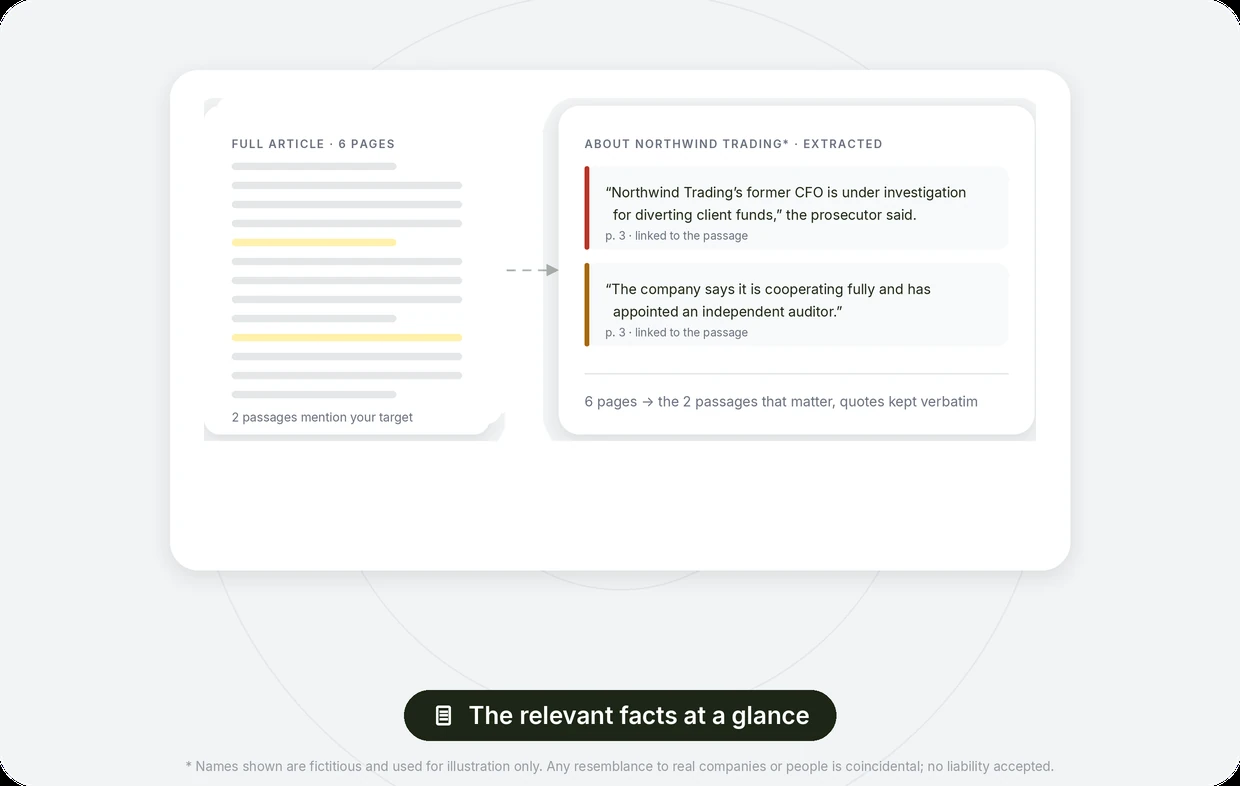
Summarization
Instead of making you read five or six pages, Beady pulls out the quotes and passages about your target, so you get the relevant facts at a glance.
step 5
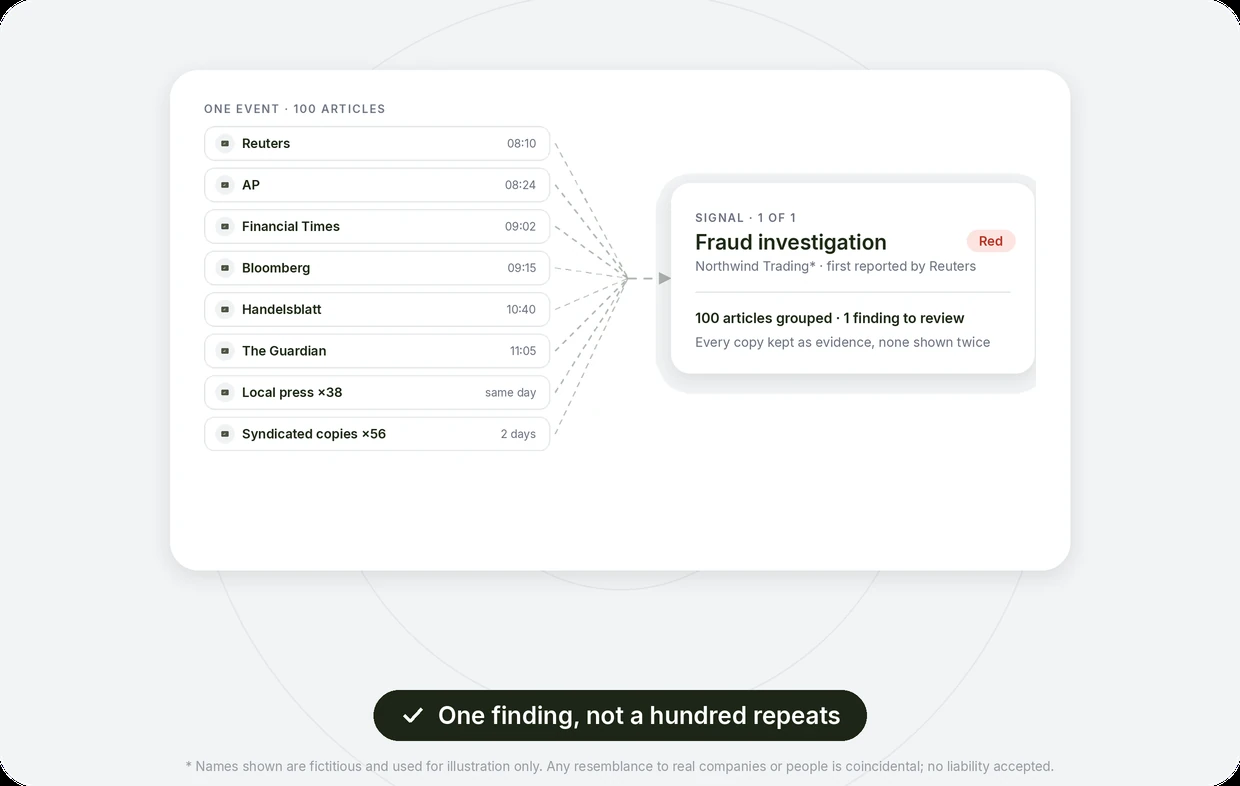
Deduplication
One event can generate a hundred articles. Beady groups coverage of the same story into a single signal, so you review one finding, not a hundred repeats.
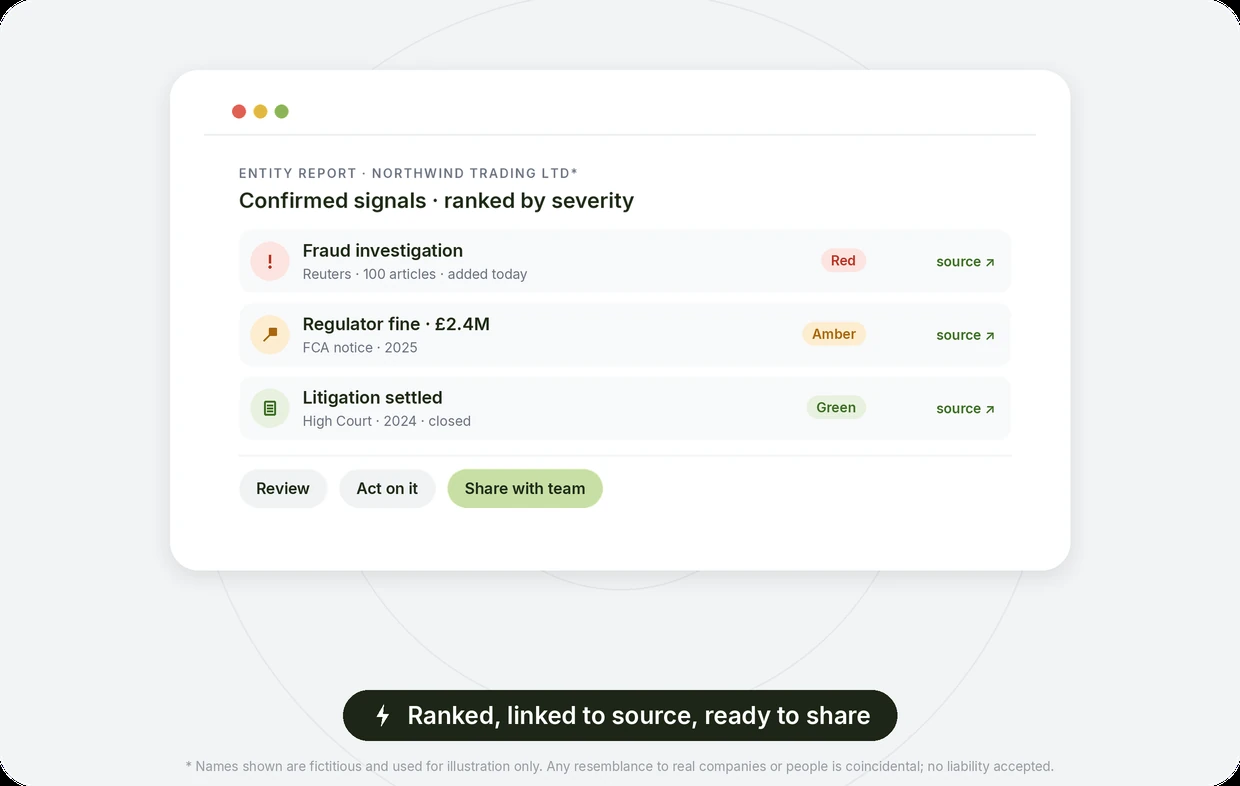
Added to Your Report
Every confirmed signal is added to the entity’s report, ranked and linked to its source, ready for you to review, act on, or share with your team.

Two Ways to Screen

Ongoing monitoring is the heart of what Beady does. Screen an entity once to start, then let Beady keep watching it every day, for as long as the relationship lasts.

Negative News Screening

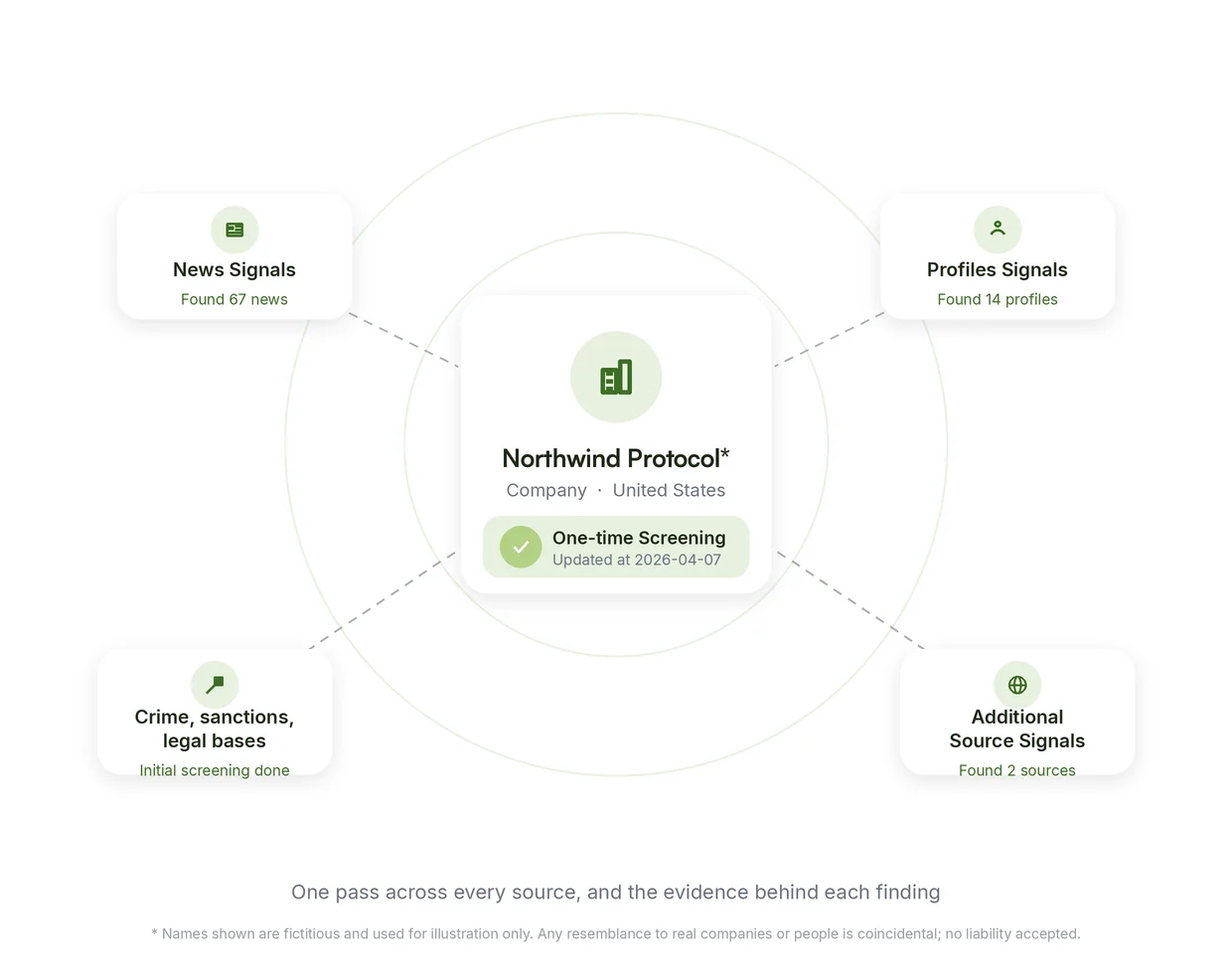
Think of screening as the one-off check. In a single pass, a name is run against adverse media and public sources, and what comes back is a clear picture of any negative coverage, each finding linked to its source. It is made for the decision you are facing now, whether that is bringing on a customer, signing a supplier, or making a hire.

Negative News Monitoring

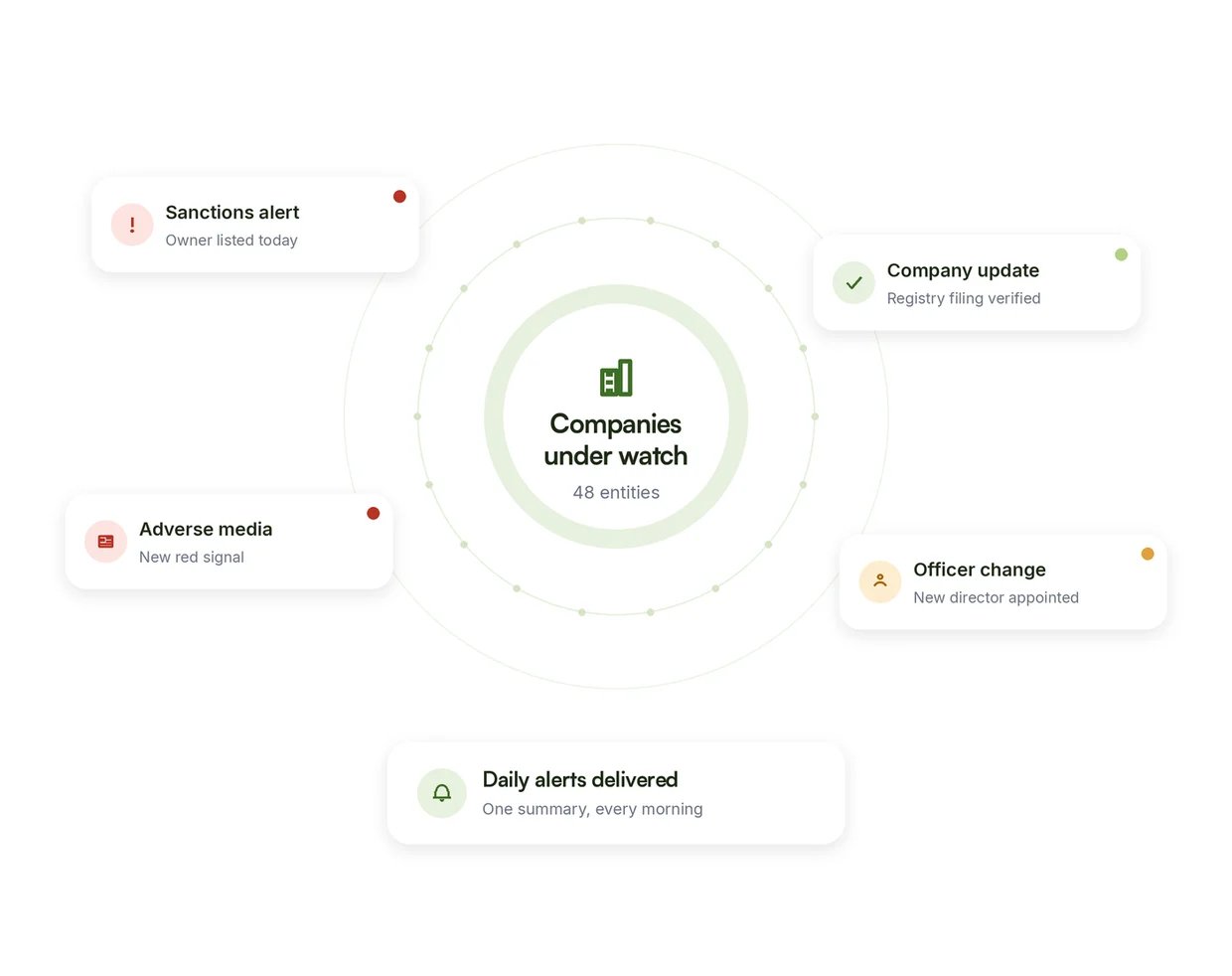
The check does not end at onboarding. As long as someone stays in your portfolio, Beady looks at the news for them every day, and if new negative coverage shows up, you hear about it straight away. Say a story breaks a month after you signed them on. It reaches you in a matter of hours, rather than sitting unnoticed until your next review. That is really the point of monitoring: you find out when it happens, not later.

01 Regulatory Compliance (AML/CFT)
Global regulators like FATF, FinCEN, and the EU directives require enhanced due diligence on high-risk clients, and adverse media is part of it. Miss an obvious money-laundering or terrorist-financing red flag, and the penalties for failing to screen can be enormous.
02 Protecting Your Reputation
In business, you’re judged by the company you keep. Partner with a corrupt or disgraced business and its reputation becomes yours. When toxic ties surface publicly, the result is immediate: customer churn, boycotts, and a wave of negative press that’s hard to undo.
03 Financial & Credit Risk Mitigation
Adverse media works as an early warning for financial exposure. If a partner suddenly comes under investigation for fraud, courts can freeze your funds or your supply chains along with theirs. And since negative news tends to arrive ahead of a financial collapse, catching it early gives you the chance to exit a risky contract before it pulls you down with it.
04 Credit & Banking Access
Clean is what keeps your banking relationships open. Tier-1 banks do not hesitate to cut off a company they discover routing money for shady entities, and institutional investors insist on rigorous ESG and compliance checks before they will fund you. Adverse media screening is what protects your access to banking and your appeal to investors at the same time.
05 Proactive Risk Management
There is usually a long delay before something shows up on an official sanctions list. Months, sometimes years, after the actual crime. Adverse media covers that stretch in between. When a scandal breaks, you see it then, not once the paperwork catches up. So you get a shot at the risk while it is still developing and you can actually do something, rather than reacting after it has been formally logged.

Built for Every Kind of Company

Every company deals with people and partners it can’t fully see. Beady screens them against negative news and public risk, whatever your size or sector.
For Fintechs & Crypto Firms
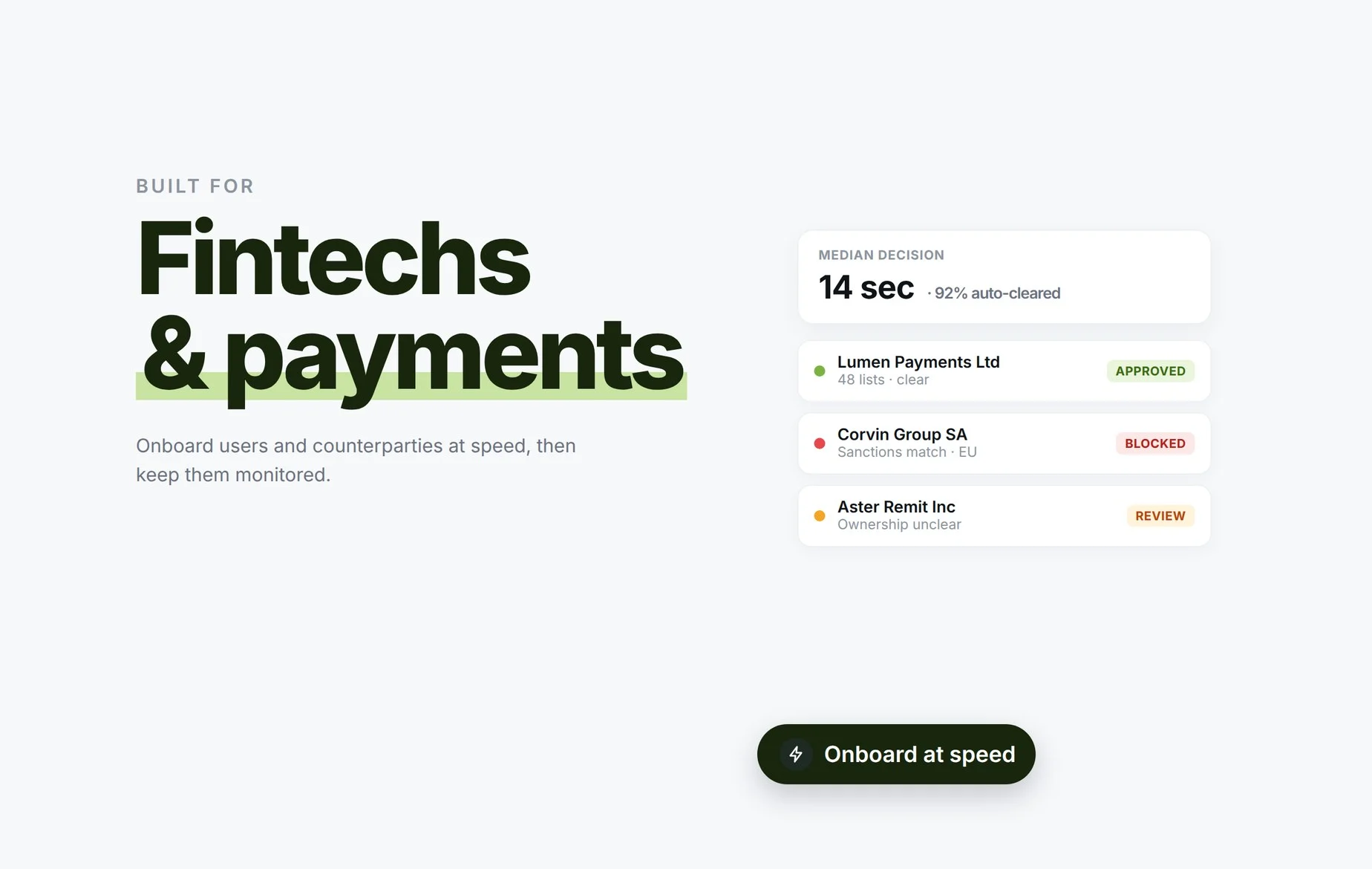
Screen users and counterparties against adverse media and sanctions as you onboard, and keep them monitored for negative news as you scale into new markets.
For Venture Funds
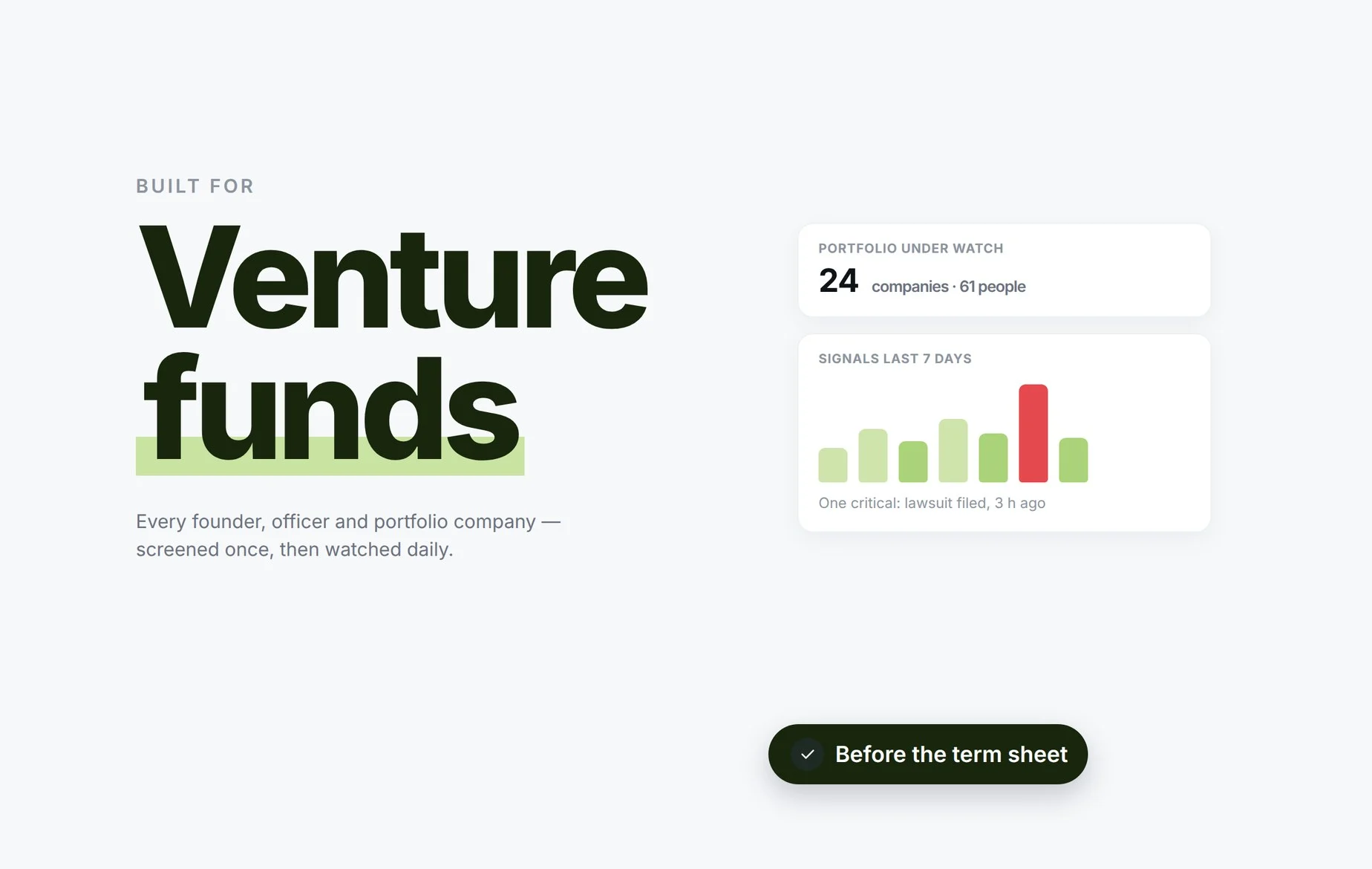
Check founders and their companies for negative news before you invest, then monitor your whole portfolio daily so a breaking scandal reaches you before it reaches the press cycle.
For Investment Companies
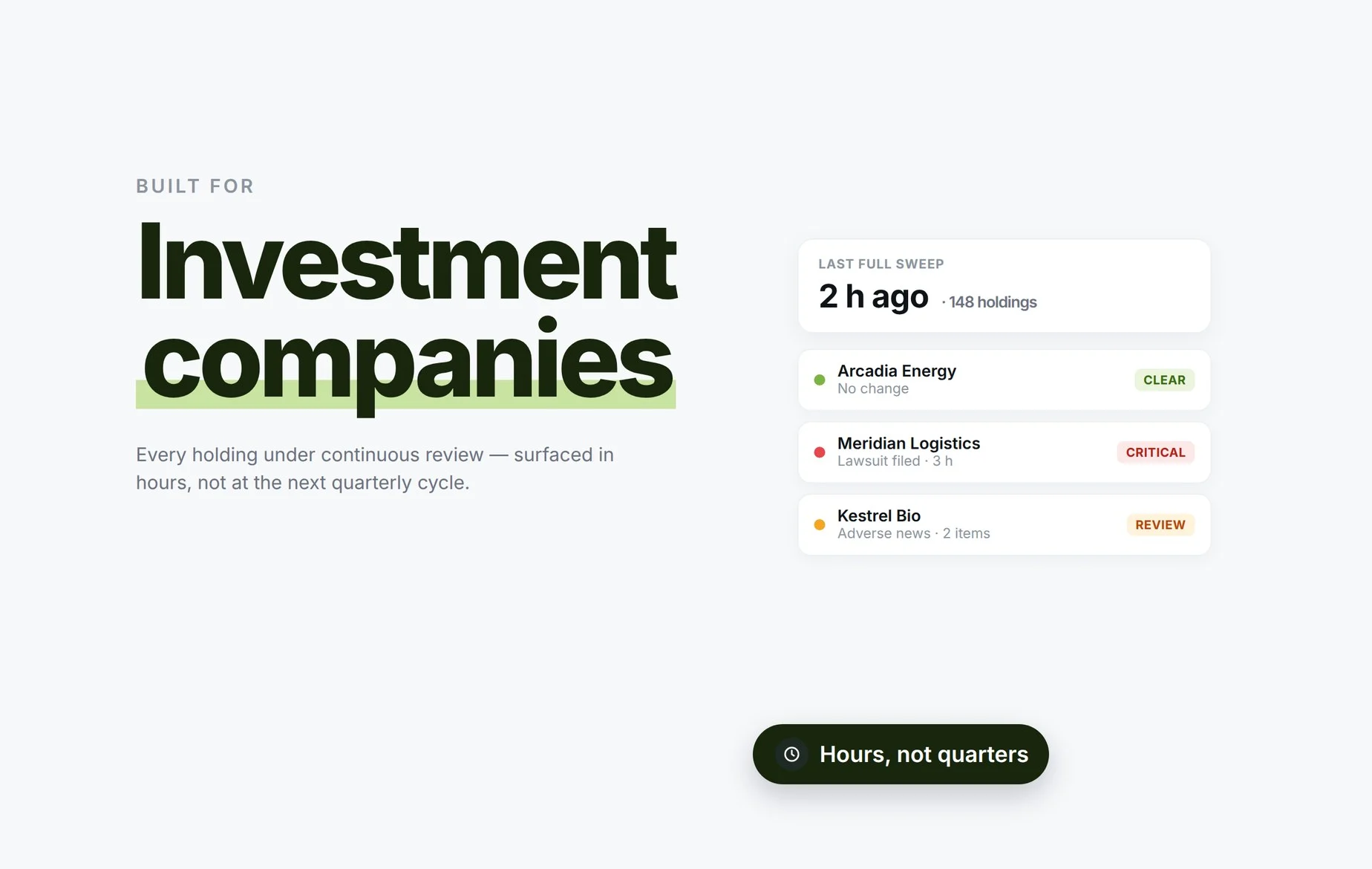
Keep every holding under continuous adverse-media watch, so a damaging story about a portfolio company surfaces within hours rather than at the next quarterly review.
For HR Departments
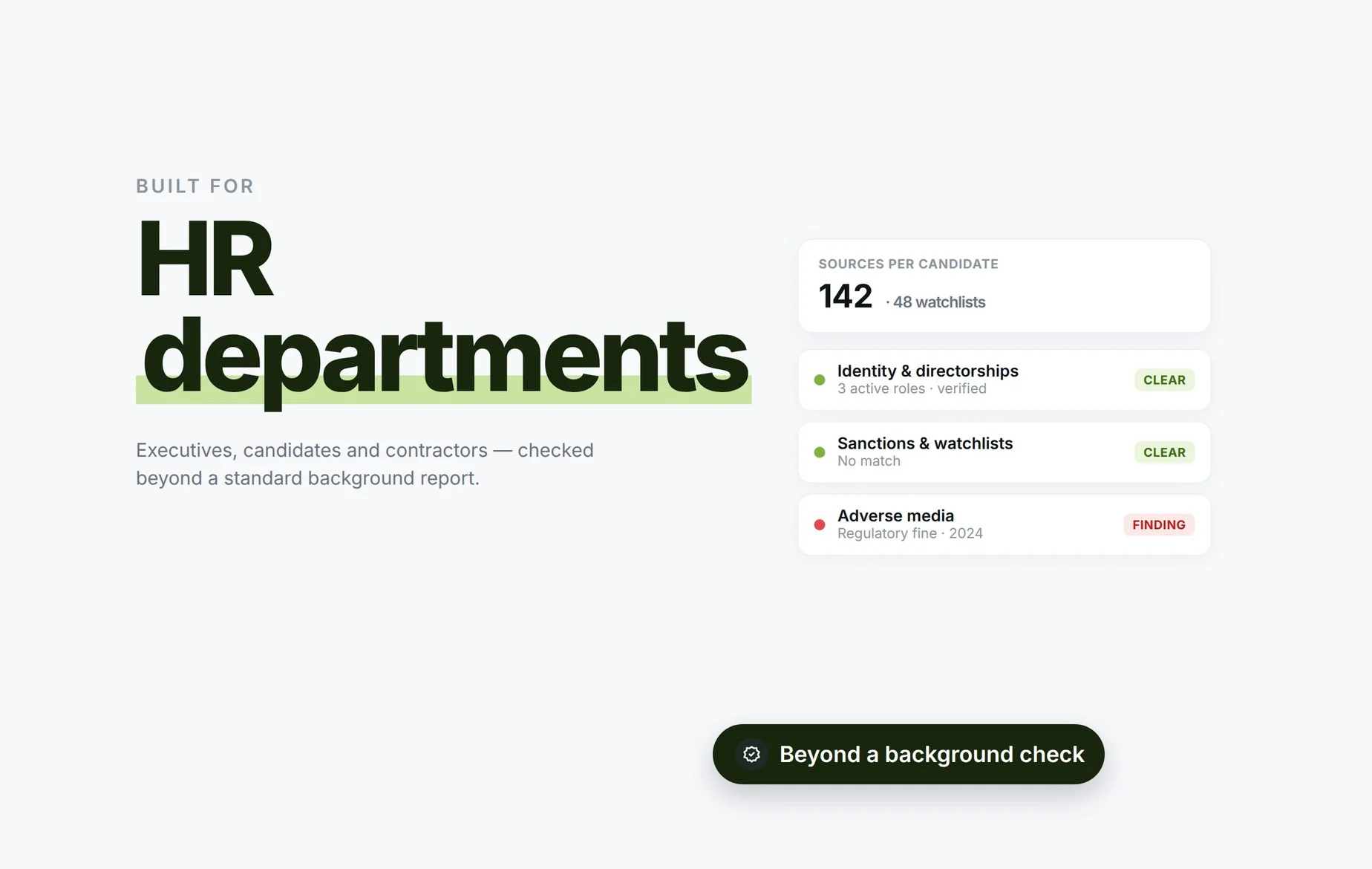
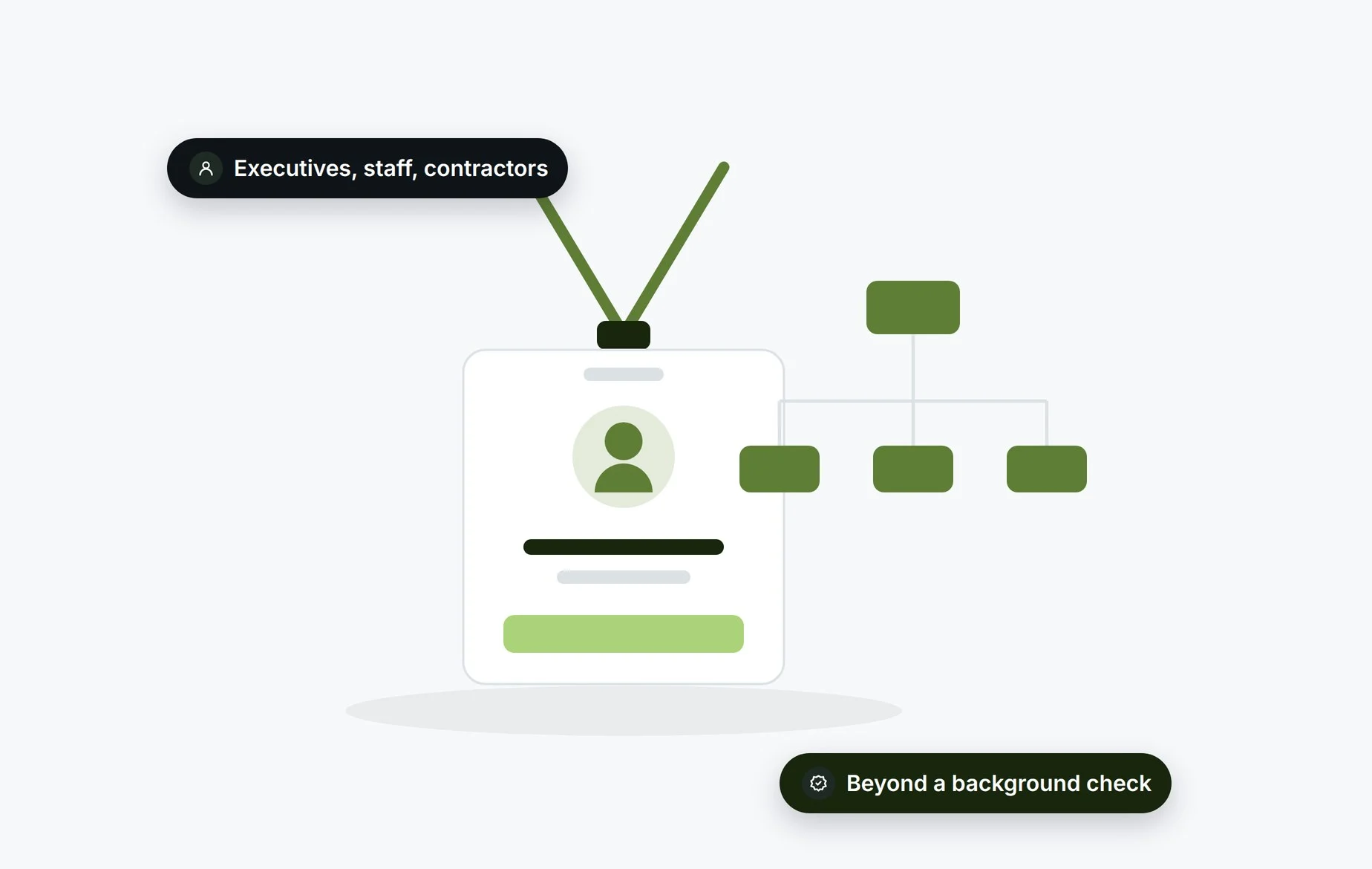
Screen executives, candidates, and contractors against adverse media before you hire, catching the reputational and integrity risks a reference call never surfaces.
For Compliance Departments
Automate adverse-media and sanctions screening, cut false positives dramatically, and attach source-linked evidence to every decision, for records that hold up under examination.
For Law Firms
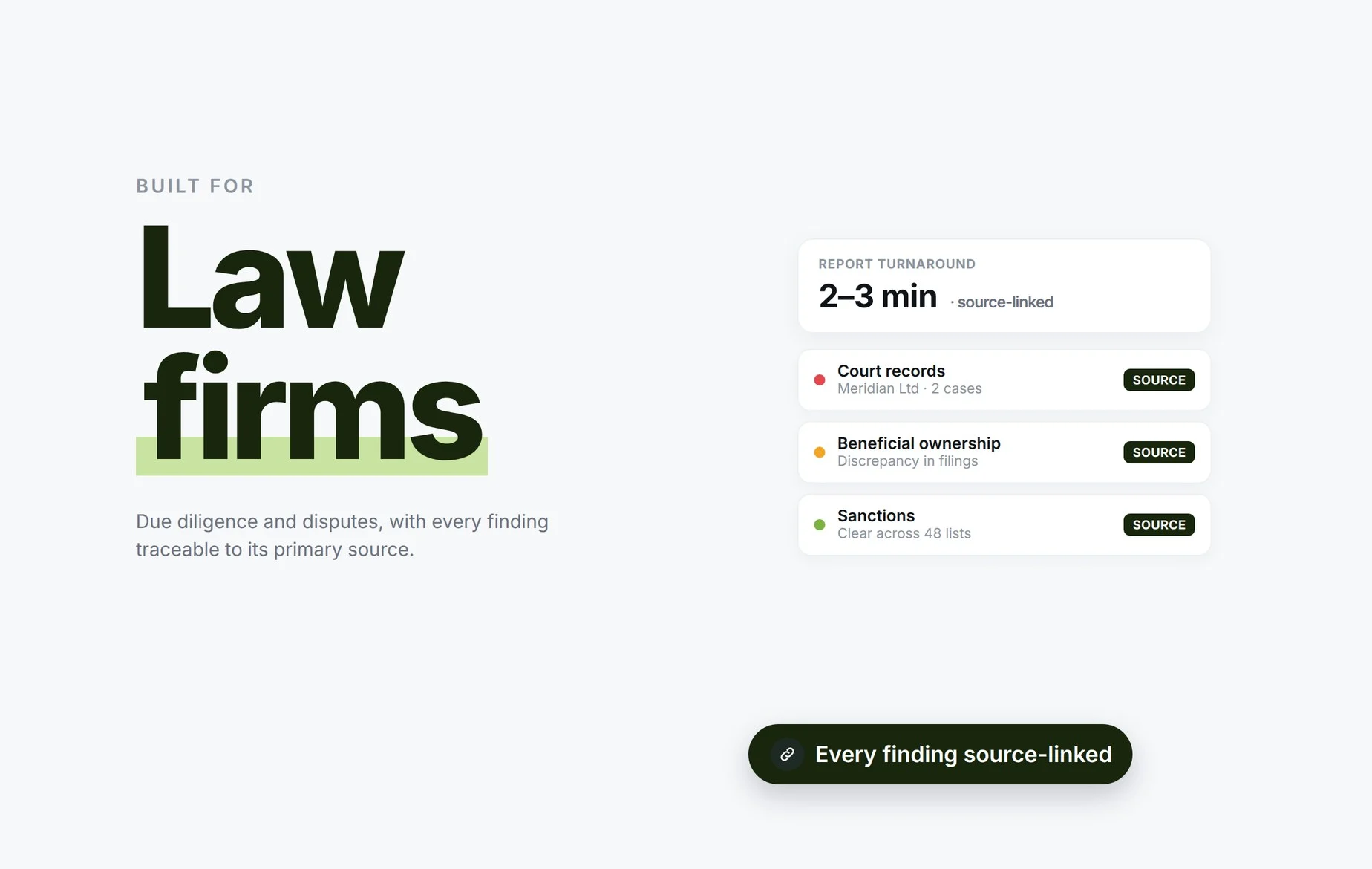
Run fast, defensible adverse-media checks for client onboarding, litigation, and due diligence, with every finding traceable back to the article it came from.
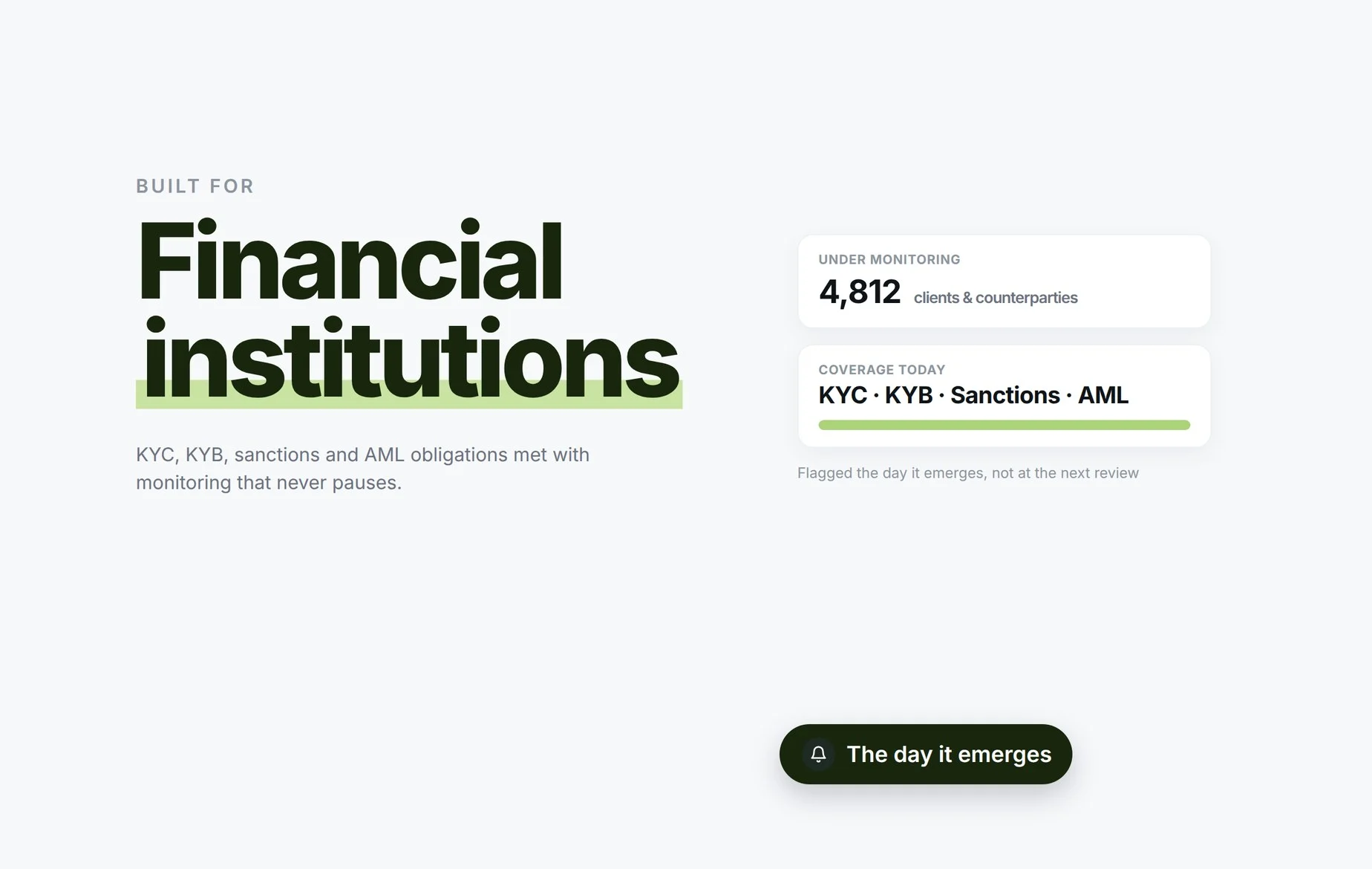
For Financial Institutions
Meet KYC and AML obligations at scale, with adverse-media and sanctions screening on customers and counterparties, plus monitoring that flags new negative news as it breaks.
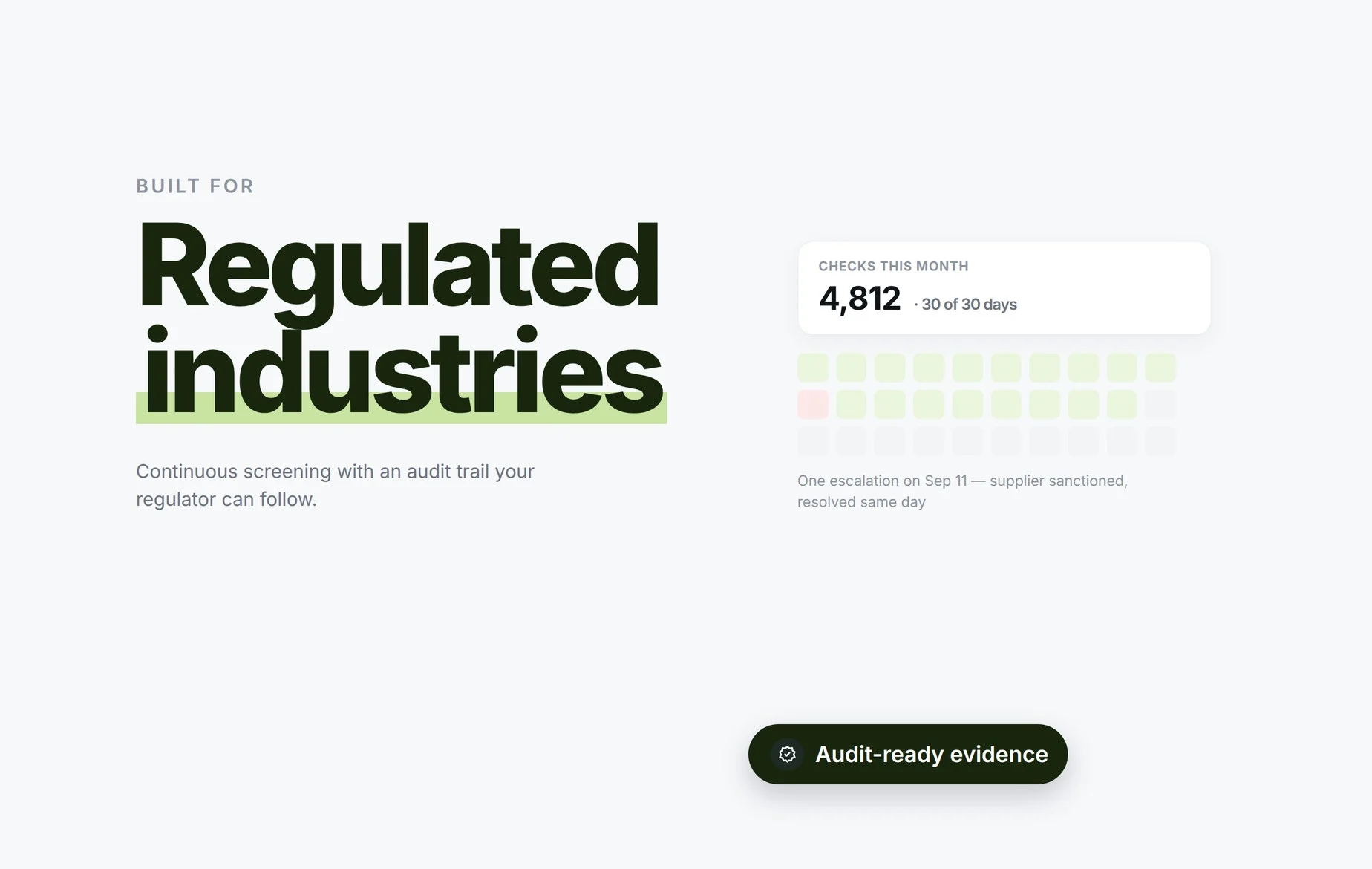
For Regulated Industries
Meet sector-specific screening rules, from gaming to healthcare to finance, with adverse-media and sanctions checks tuned to what your regulator expects.
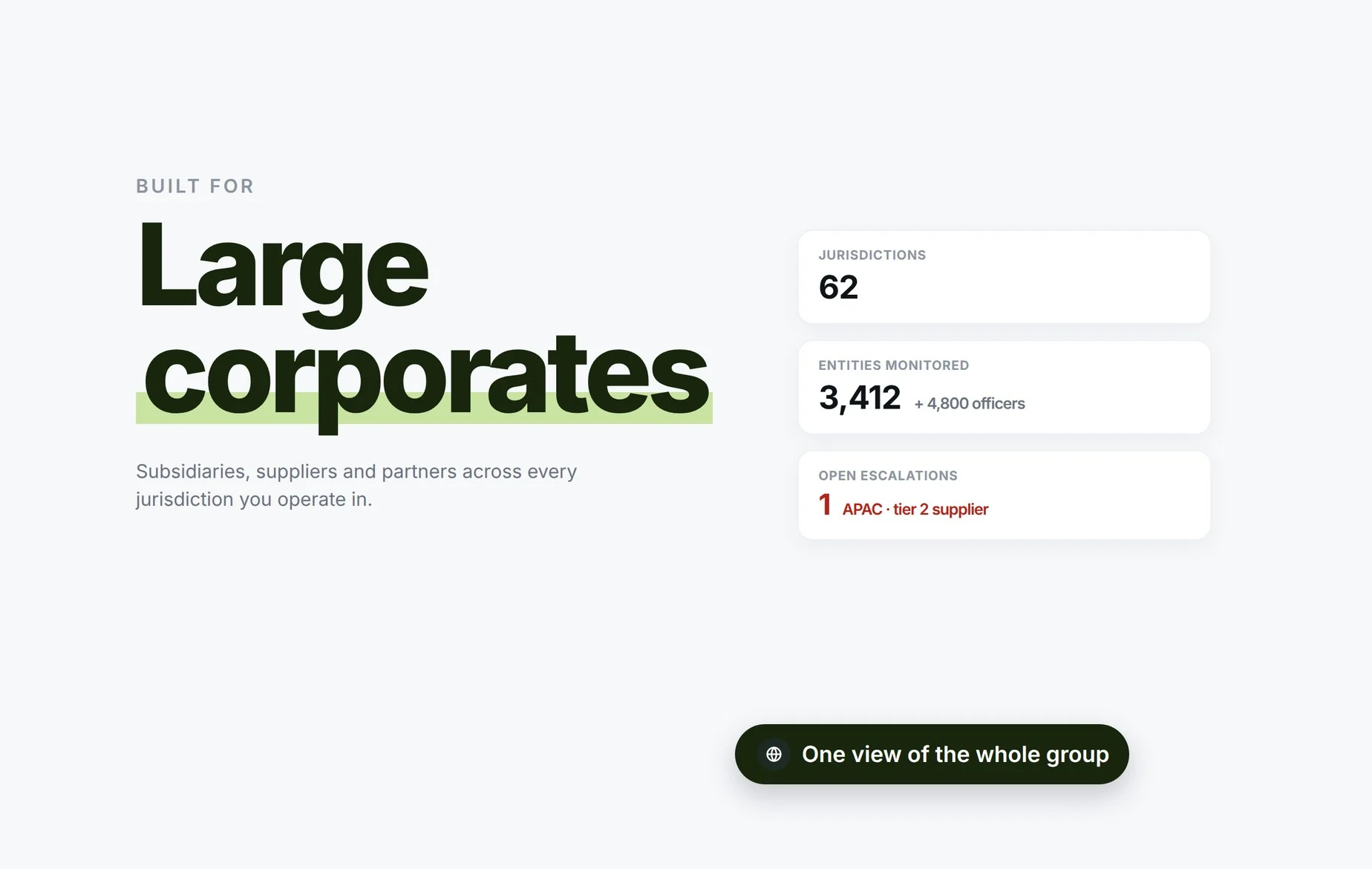
For Large Corporates
Screen customers, suppliers, partners, and hires across the enterprise for negative news and reputational risk, thoroughly, at scale, and all in one place.

Works Across Industries

One platform, every industry. Screen the people and companies you deal with against negative news, sanctions, and public risk wherever you operate.
Software & Technology
Check investors, acquirers, and enterprise partners for negative news before you commit, and keep key relationships monitored through funding, M&A, and rapid growth.
Finance & Insurance
Meet KYC and AML duties with adverse-media and sanctions screening on customers and counterparties, and monitoring that flags damaging news the day it breaks.
Supply Chain
Screen suppliers and vendors for negative news and ethical red flags across your tiers, before onboarding and throughout the relationship.
Government
Vet contractors, grant recipients, and partners against adverse media and public records, with source-linked evidence that stands up to public scrutiny.
Law Enforcement
Accelerate investigations with source-verified searches across news, sanctions, and criminal and most-wanted lists, all in one place.
Human Resources
Screen every candidate, contractor, and executive against adverse media before hiring, catching reputational risks a standard check leaves out.
Healthcare
Screen clinicians, staff, and vendors against adverse media, exclusion lists, and disciplinary records, protecting patients and your regulatory standing.
Trading
Vet counterparties and the people behind them against adverse media and sanctions in minutes, spotting exposure before you take a position.
iGaming
Carry out fast adverse-media, PEP, and sanctions checks on players and partners, so you stay on top of AML and licensing requirements while keeping onboarding smooth.
Energy & Utilities
Check contractors, partners, and joint-venture counterparties against negative news and sanctions risk in each market you work in.
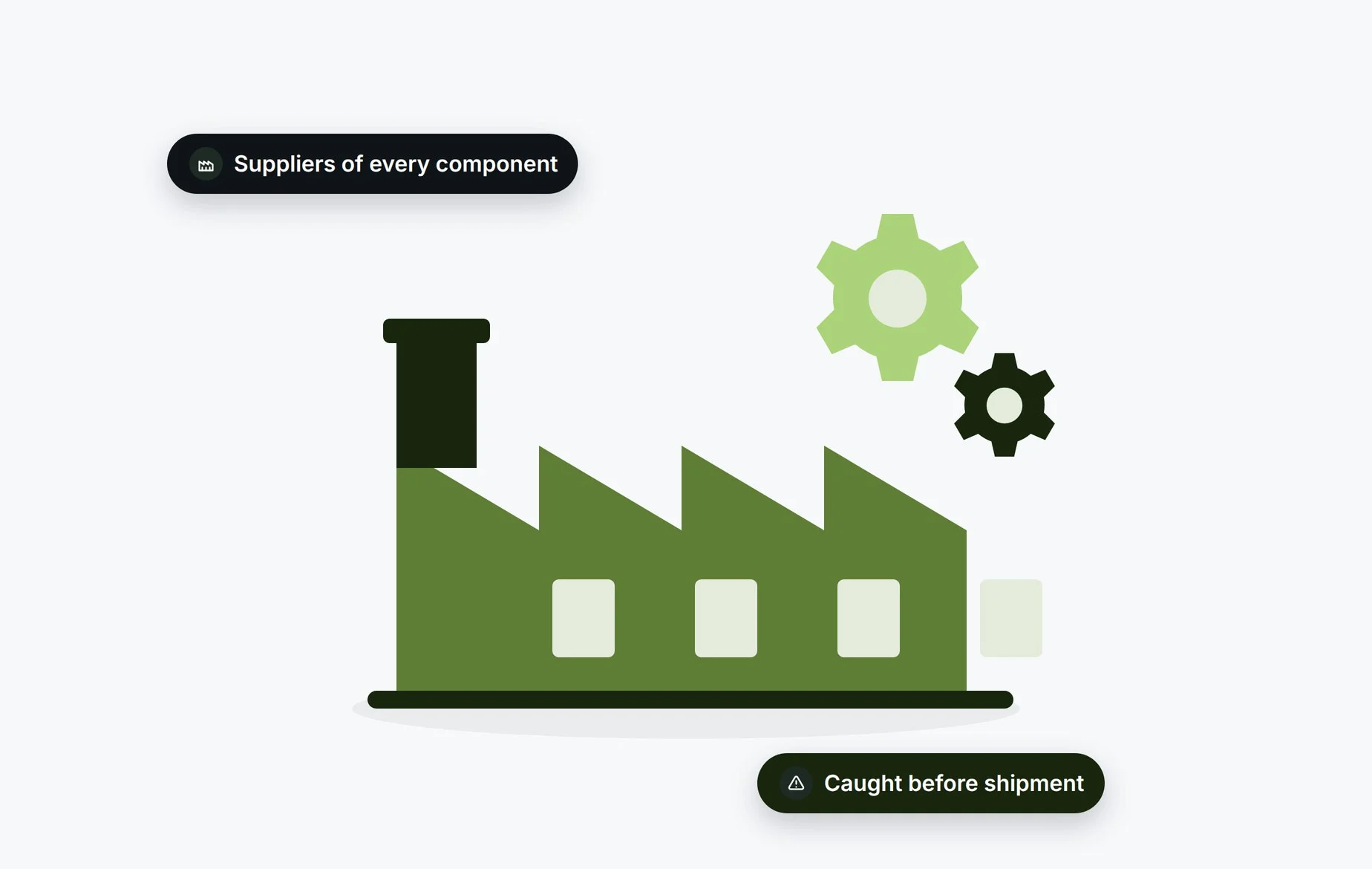
Manufacturing
Vet suppliers, distributors, and partners across markets for adverse media and reputational risk, keeping your supply chain clean.
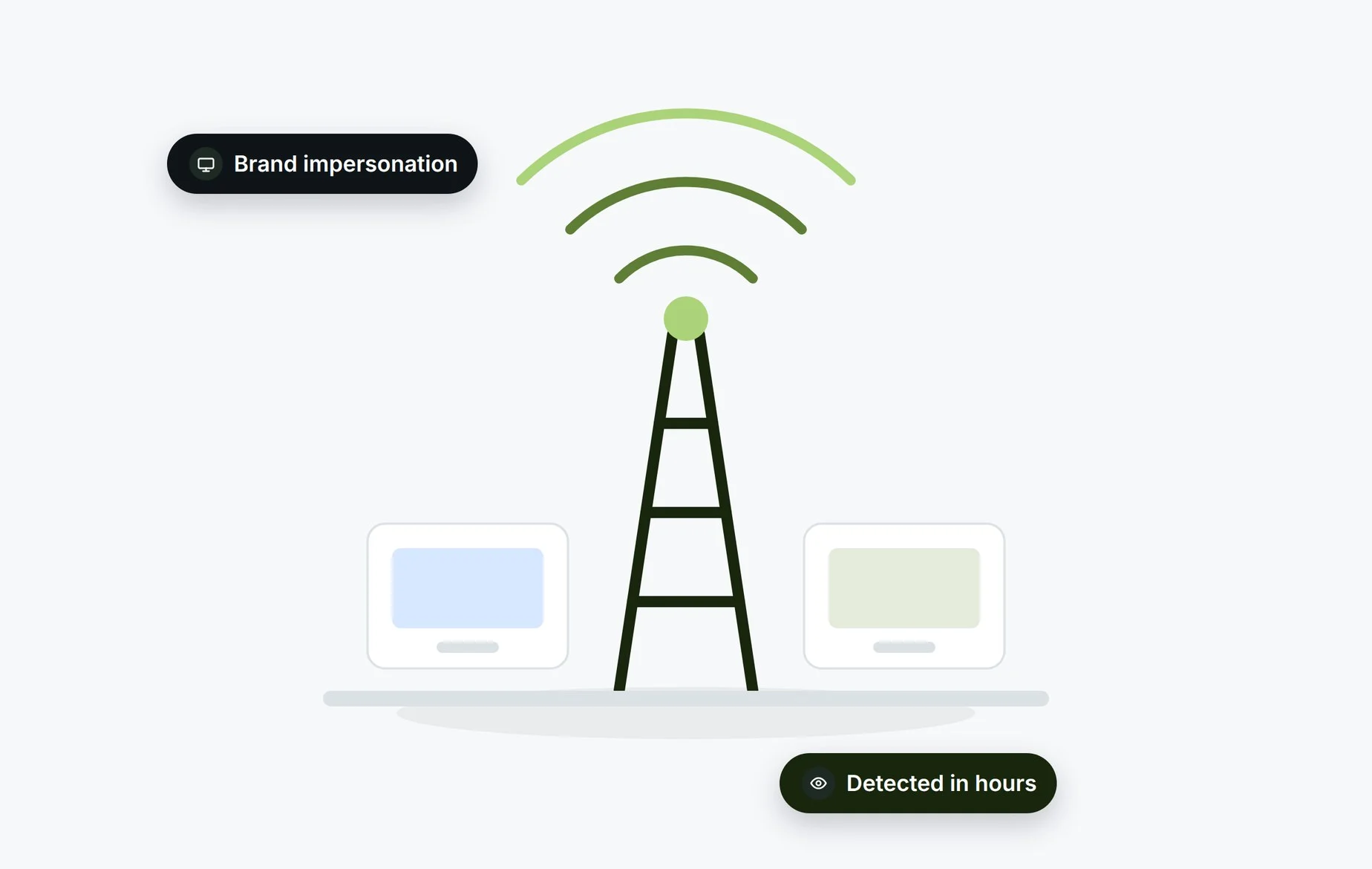
Media & Telecom
Vet talent, advertisers, and partners against adverse media, and catch impersonator accounts and damaging stories that target your brand.
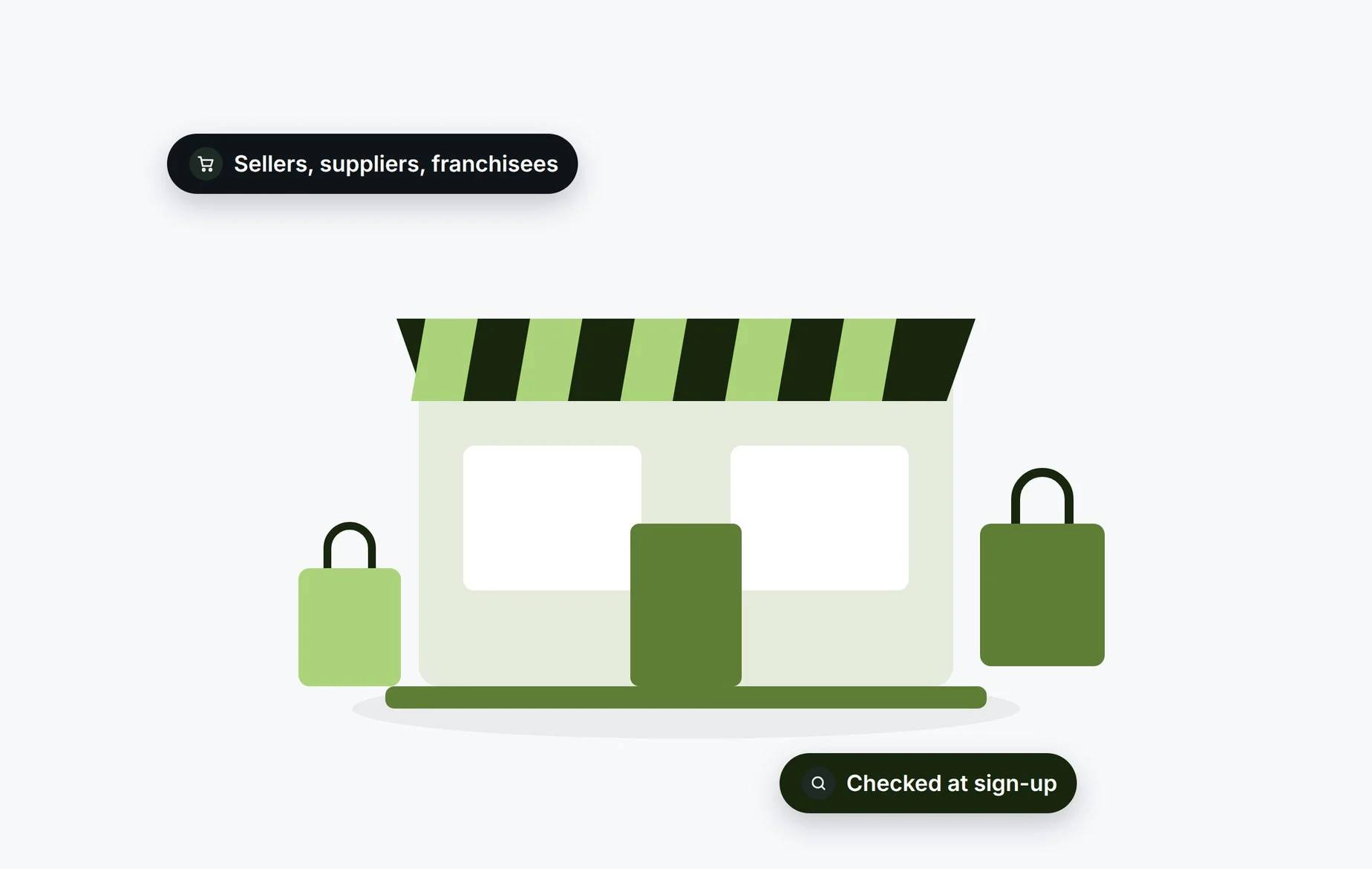
Retail
Check suppliers, franchisees, and brand endorsers against negative news and reputational risk, so you can safeguard your customers and your reputation no matter how much you grow.

Clear Intelligence, Built for Your Workflow

Trace every mention back to its source, generate reports that stand up to an audit, and send adverse-media findings straight into the tools your team already relies on.
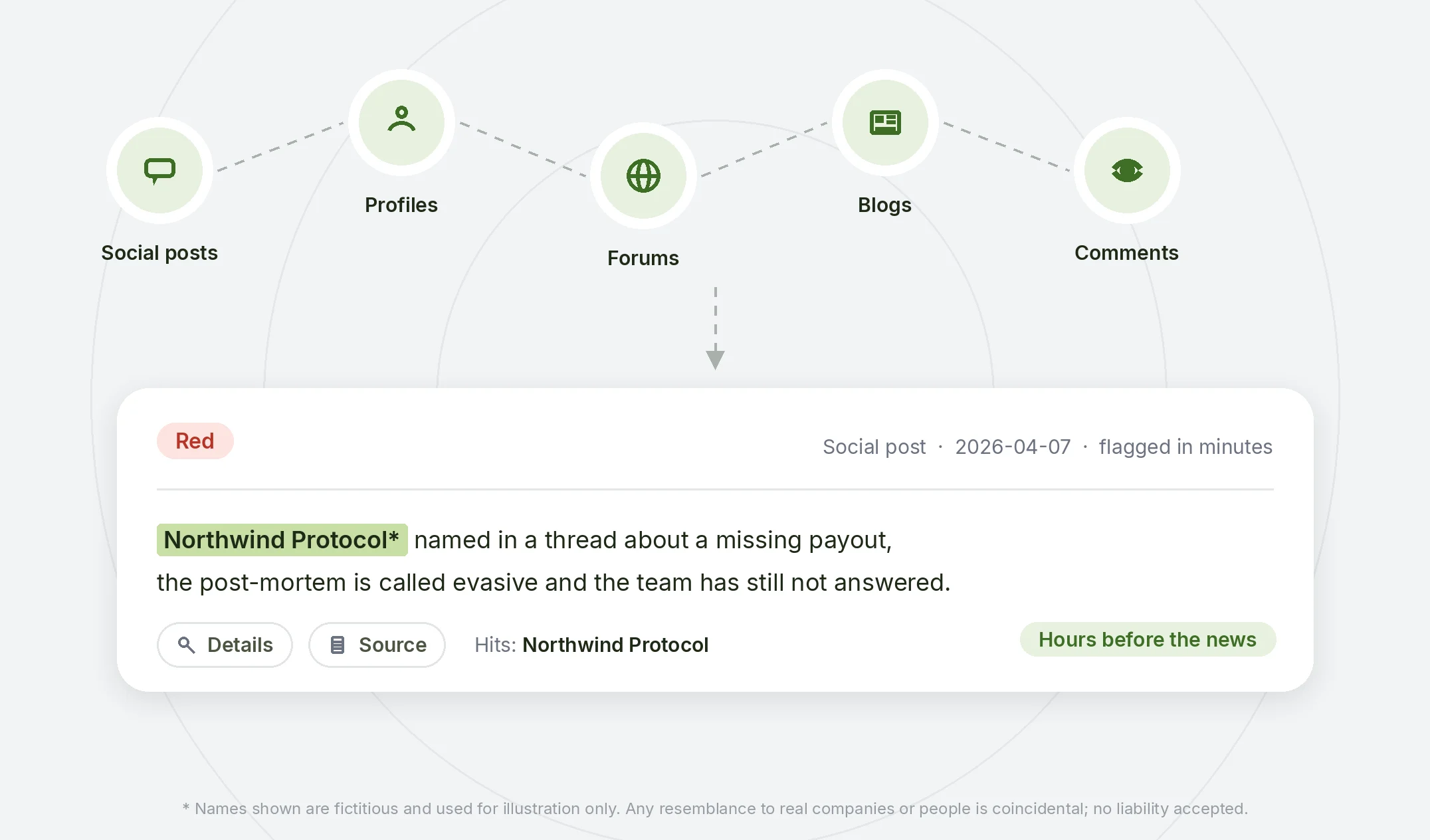
Social Signals Monitoring
Beady keeps an eye on public social sources in real time, not only the news. A lot of risk signals — an accusation, an exposé, a scandal starting to take shape — show up on social media hours or even days before mainstream outlets pick them up.
The lead time depends on who and what sector you are looking at, but since social monitoring covers everyone you screen, you are always positioned to catch it as early as anyone could.
Messenger Integration for Daily Risk Alerts
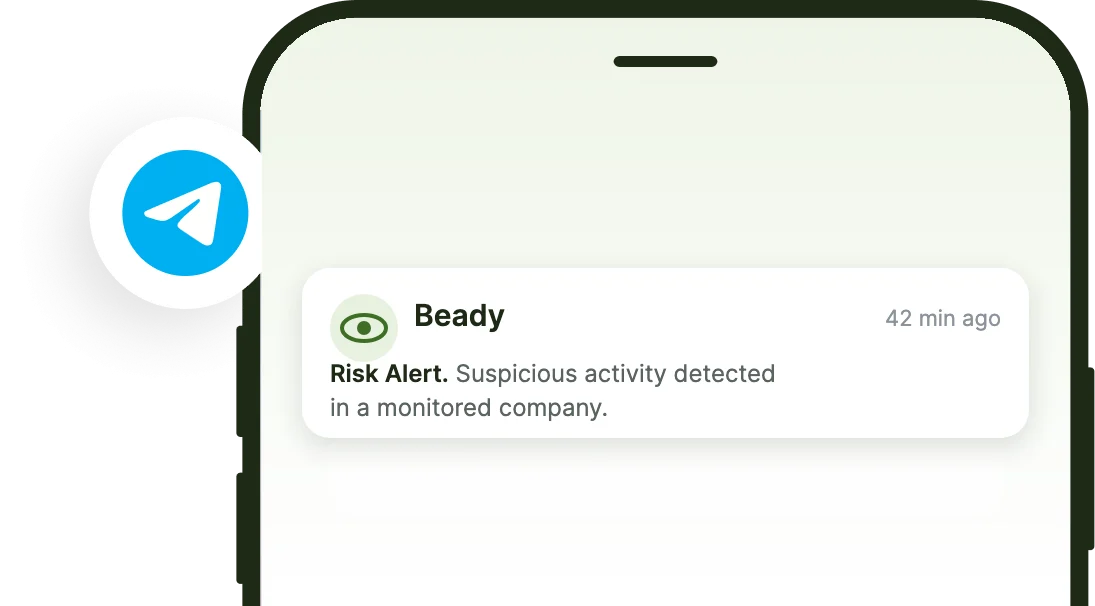
Beady connects to messaging platforms like Telegram to send daily alerts on the most important negative-news findings from your monitoring, with no need to log into the portal each day.
Skim a short summary on your phone, and when a story needs a closer look, sign in for the full report and the source behind every flag.
Quality Of The Data Provided
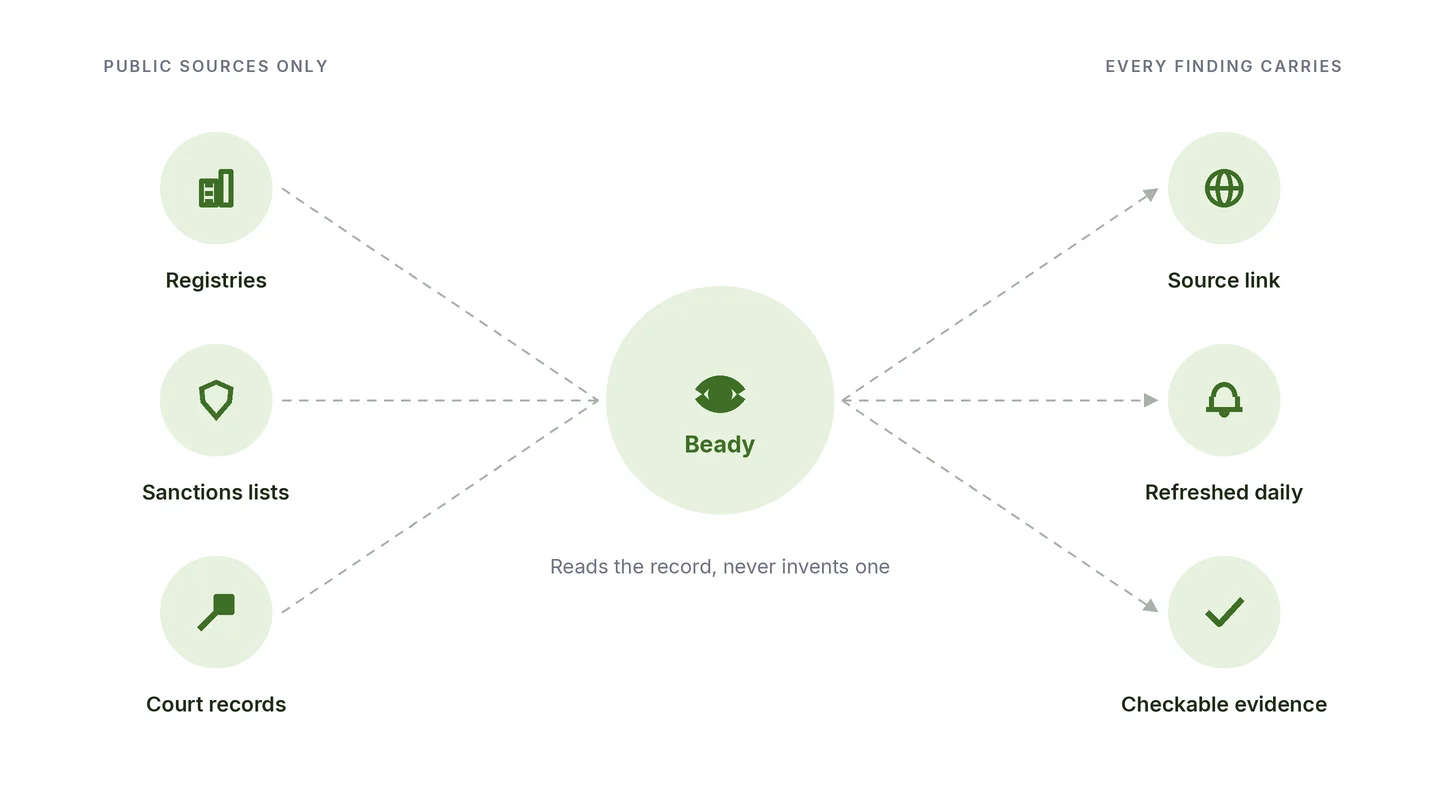
Beady works only with publicly available data, refreshed daily and updated as soon as a change appears. Every finding carries a direct link to the article or record it came from.
And the AI never invents or embellishes. Each result can be checked against its original source, so an adverse-media report is something you can verify, not just trust.
Report Consolidation
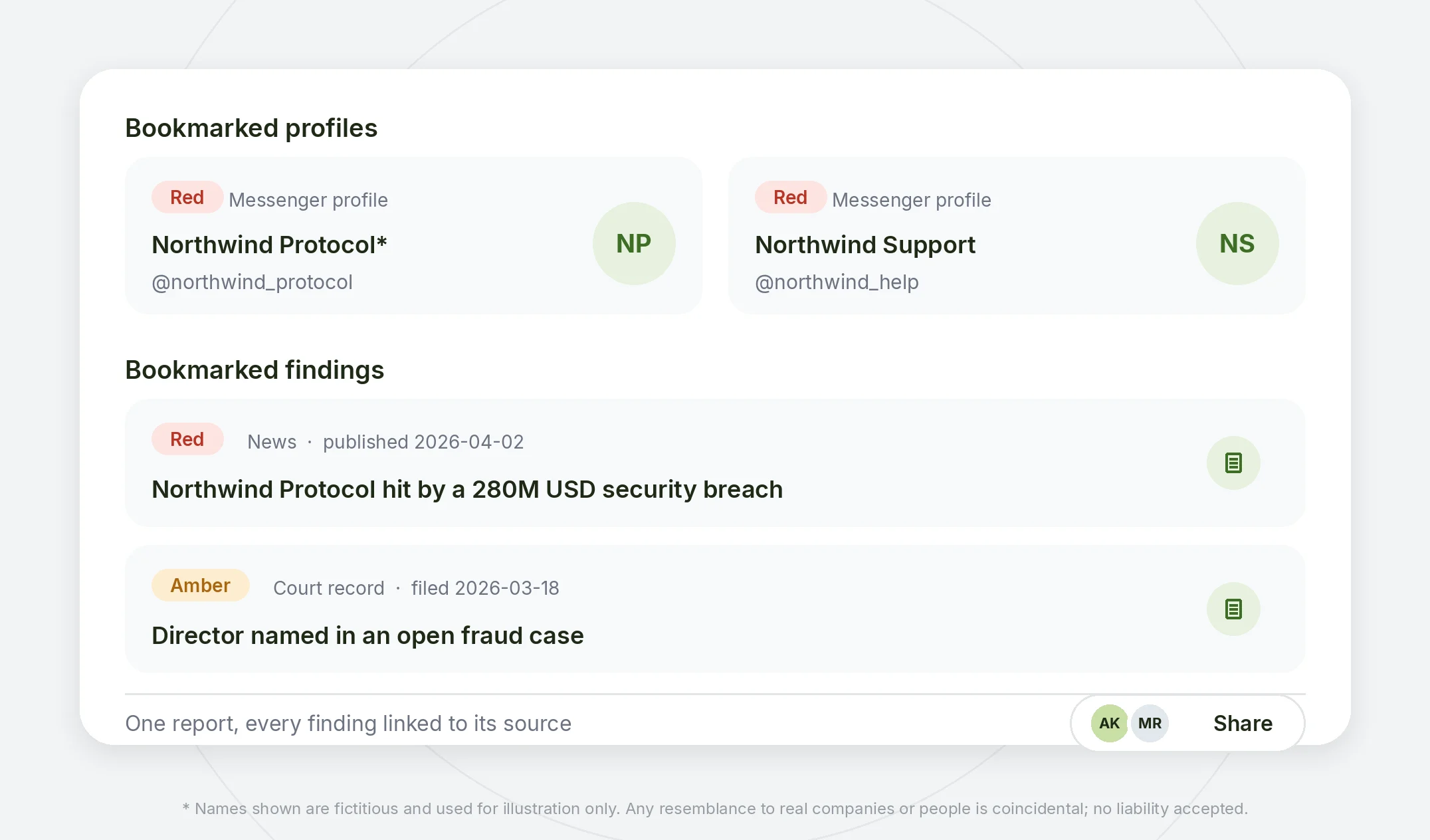
Bookmark the mentions and signals that matter to build a report around a specific name, case, or decision. Share it in a couple of clicks with an analyst, the compliance team, or anyone weighing in.
Everyone works from the same set of verified findings, so no one has to repeat the search on their own.

How it works

A step-by-step look at how a flood of public information becomes a short, verified set of adverse-media signals.
Step 1
Add the Name
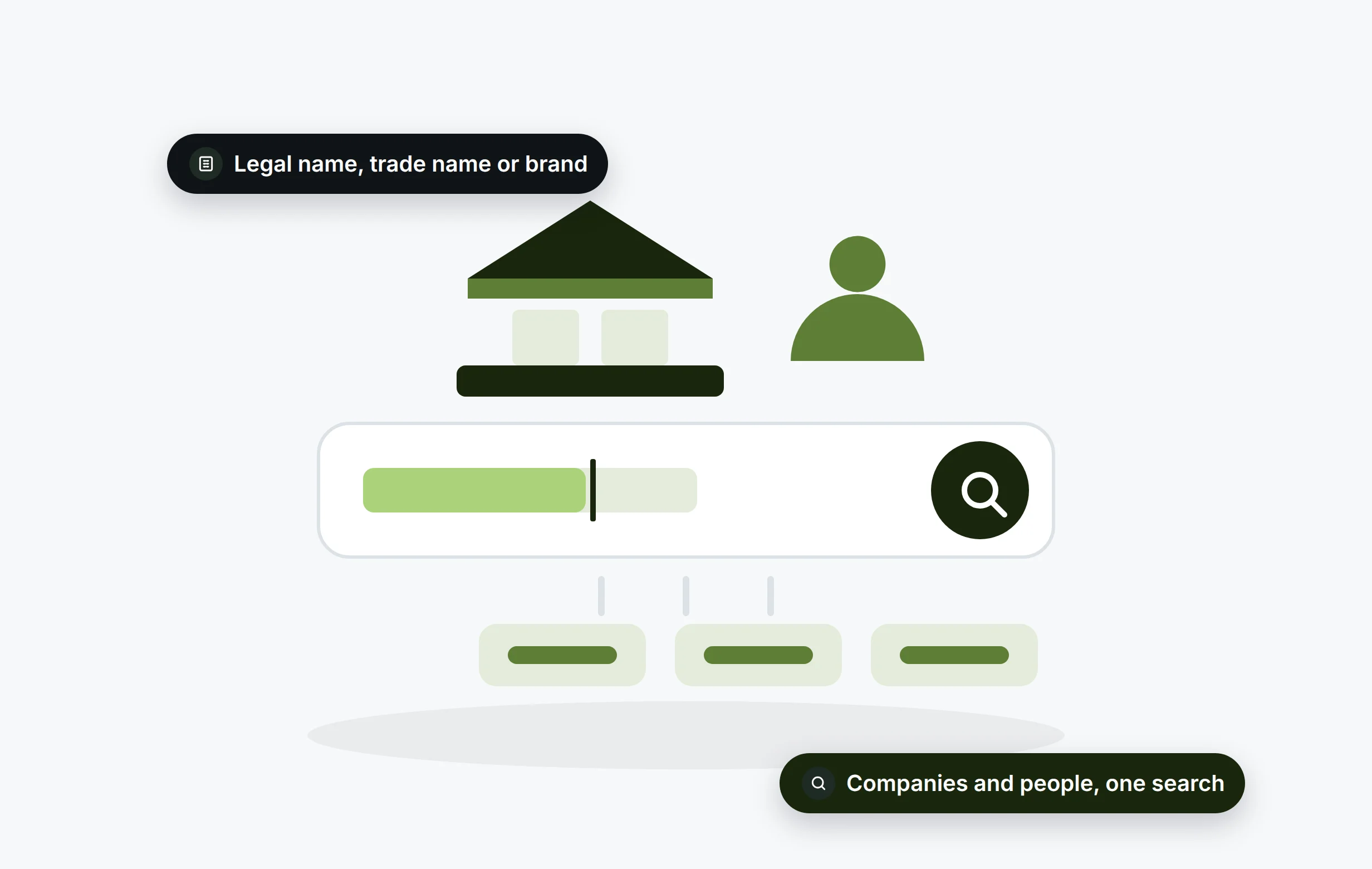
Enter the person or company you want to screen, whether a customer, a supplier, or a candidate, to begin.
Step 2
Screen
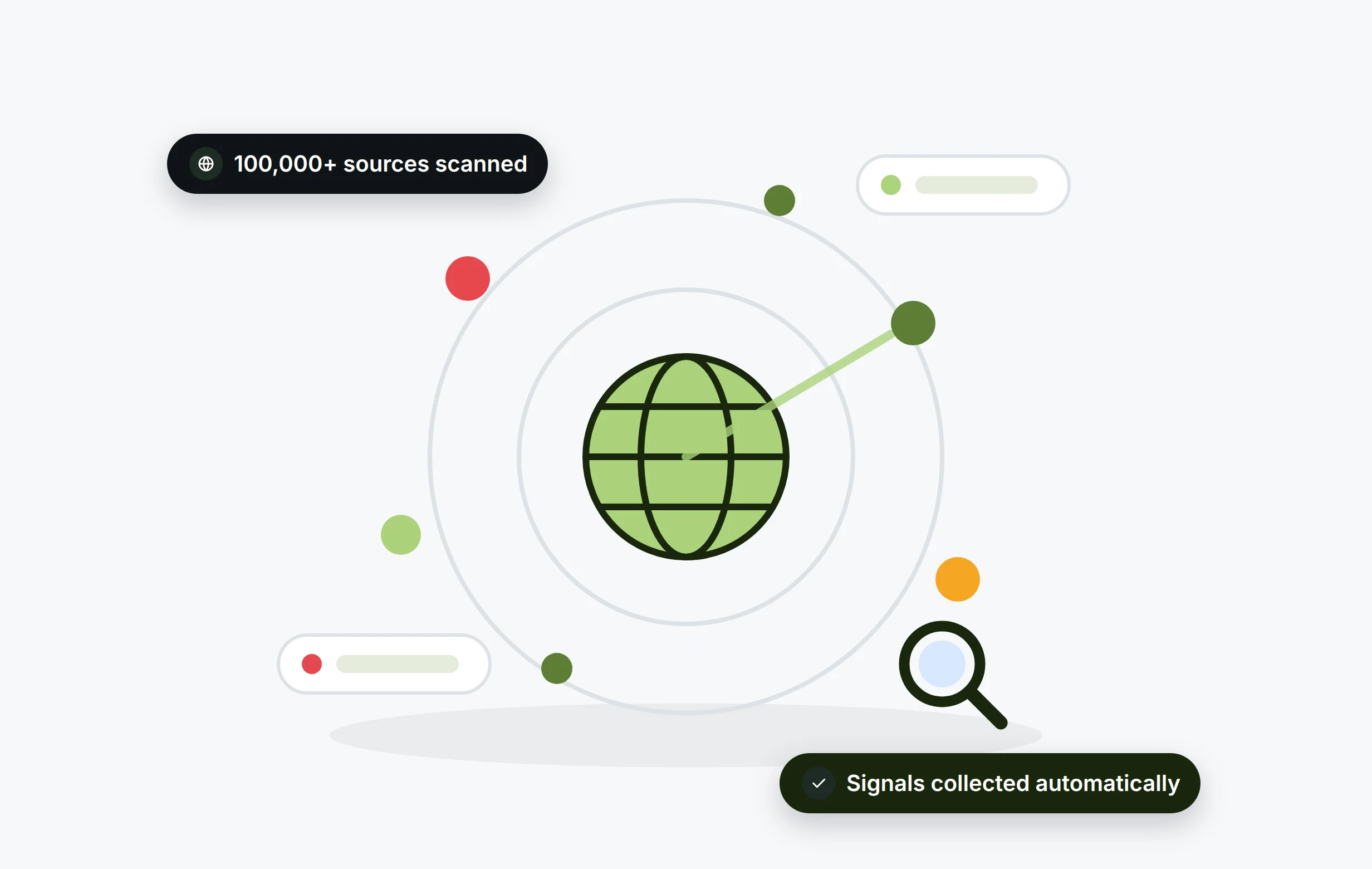
Beady automatically searches 100K+ news sources, sanctions and watchlists, and public records, gathering every mention tied to that name.
Step 3
Filter the Noise
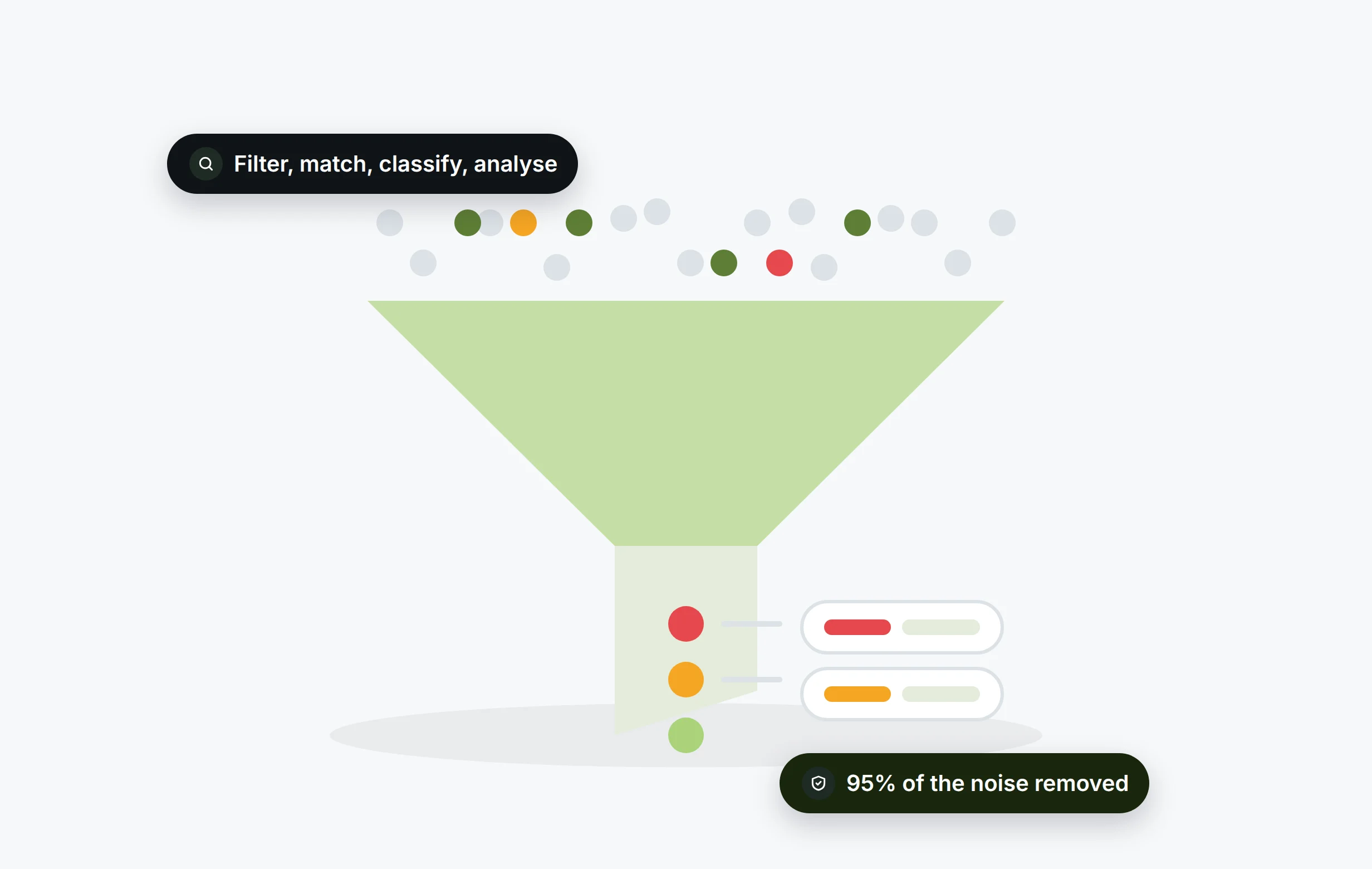
The AI reads, matches, and classifies each mention, removing wrong-person hits and duplicates to leave only the relevant, real signals.
Step 4
Build the Report
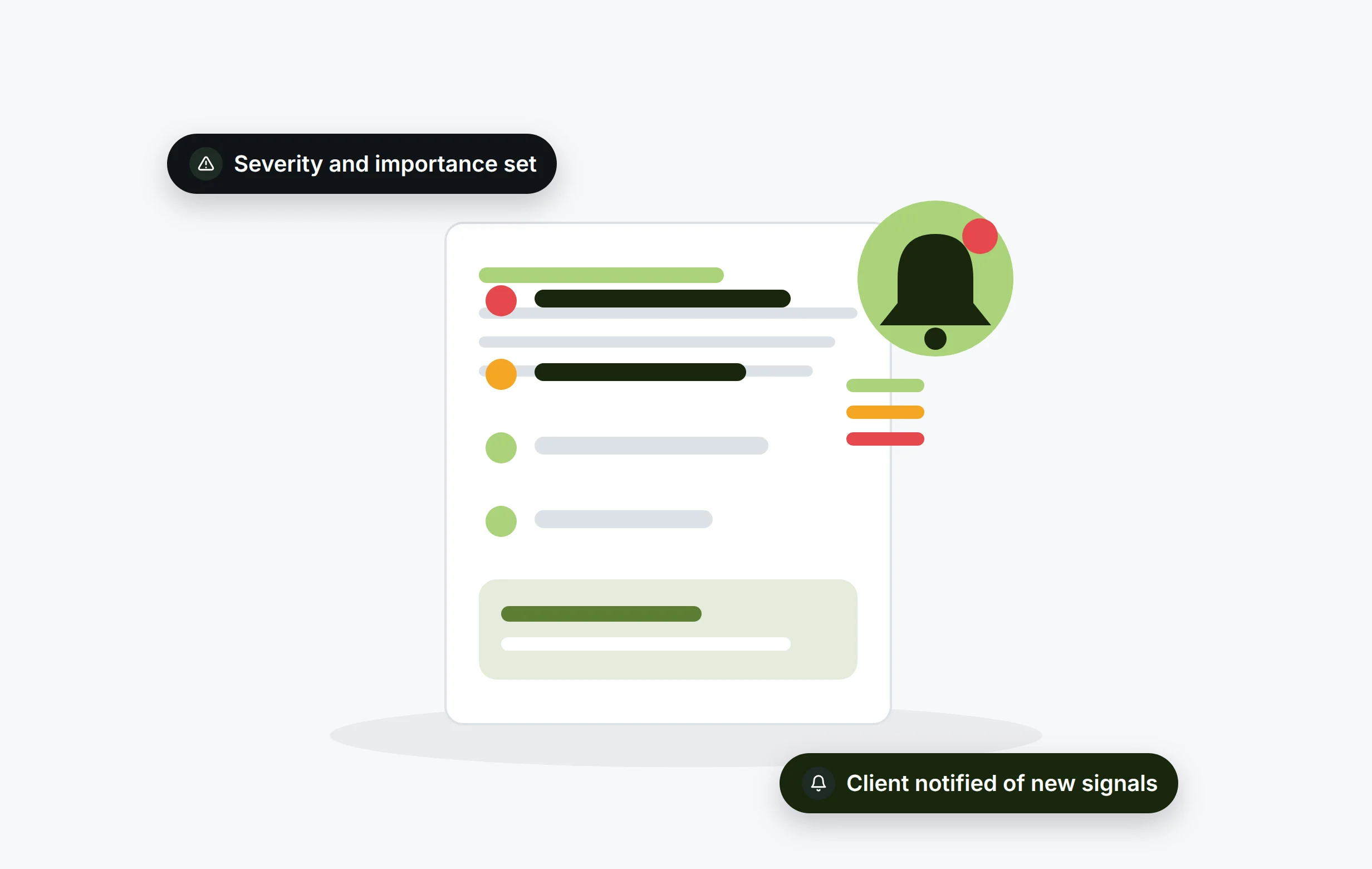
Confirmed findings go into a single report, ranked by severity, with each one linked back to the article it came from.
step 5
Monitor & Share
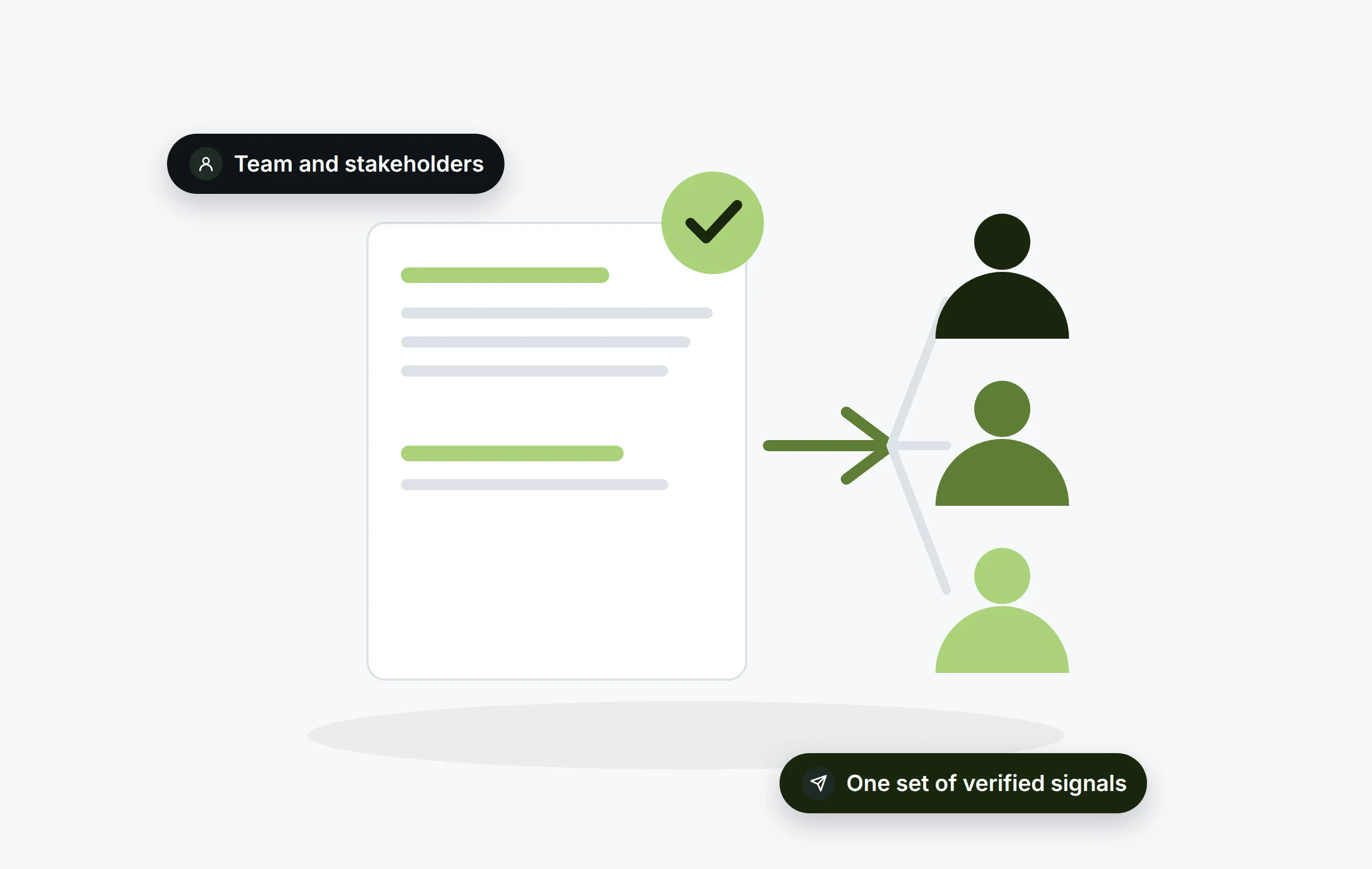
Keep the name under daily monitoring for new coverage, and share a clean, consolidated report with your team whenever you need to.

Frequently
Asked Questions

What sources can organizations use for negative news screening?
Negative news can come from mainstream and local news outlets, industry and trade press, regulatory and enforcement announcements, court and public records, sanctions and watchlists, and social media. The challenge is coverage and quality. Beady draws on 100K+ news sources and 100,000+ public sources, refreshed daily, so you’re not relying on a handful of feeds.
The problem with a manual approach is that it cannot keep up, and it lets things fall through the cracks. Technology searches 100,000+ sources in one pass, reads across multiple languages, gauges whether each result is relevant, and drops the noise. Beady’s AI takes out close to 95 percent of the irrelevant hits and connects every finding to where it came from, so instead of trawling through countless articles, your team works from a short, verified list.
Anything that points to risk attached to a person or company qualifies. On one side you have financial crime like fraud, money laundering, and corruption. On another there are arrests, charges, and convictions, regulatory fines, and enforcement action. Sanctions designations, lawsuits, and major ethical or reputational scandals all belong here as well. Beady brings these to the surface from news, public records, and social sources.
Three things are usually on the line: money, reputation, and standing with regulators. The value of screening is that it surfaces risk that has not yet made it onto any formal list, so a business can turn away a fraudster before signing them on, keep from bankrolling financial crime, or avoid being tied to the next scandal. It also happens to be central to satisfying KYC and AML rules.
Screening is a one-time check: you run a name and get a picture of any negative coverage at that moment. Monitoring is ongoing: once someone is in your portfolio, the check repeats daily and alerts you when new coverage appears. Screening suits onboarding; monitoring keeps you current afterward.
Beady pulls only from publicly available data, checks it every day, and updates the moment something changes. Each result points straight to the original article or record it came from, and the AI will not guess or fill in gaps — so you can always trace a finding back and confirm it yourself.
Daily. Beady rechecks its sources every day and reflects new coverage as it appears, so a story that breaks after your first screen reaches you within hours through ongoing monitoring, rather than waiting until your next scheduled review.

Blog

Ready to get started?

Helping you go live in days, not weeks.